Pharmacy takes the lead with generative AI in the classroom

This article was published in The Script Magazine – Spring 2026.
In late 2022, a new presence worked its way into classrooms. Sliding just under the radar, ChatGPT began to subtly take hold in homework assignments, discussion board posts and essays. And instructors weren’t quite sure what to make of it.
As curiosity and concern about the new technology grew at The Ohio State University College of Pharmacy, Steven Nagel, director of learning design and multimedia, took on the task of characterizing the technology to familiarize members of the college with how it could be used as a tool by learners.
“In instructional design, you have to keep abreast of emerging technologies that could change the learning landscape” Nagel said. “The initial unease from faculty spurred my interest in completing a comprehensive analysis of generative artificial intelligence. I wanted to provide clarity to our instructors who would encounter it more and more.”
Through testing and research, Nagel developed an understanding of the technology. He presented a thorough introduction to the college’s faculty and staff in early 2023.
What began as an effort to help instructors understand ChatGPT flourished into a structured, research-supported initiative to increase responsible AI fluency across undergraduate, graduate and PharmD programs.

A foundational study for AI in pharmacy classrooms
In 2024, Nagel teamed up with faculty partners Molly Downing, PhD, assistant professor, and Jen Plahovinsak, MS, director of MS Translational Pharmacology program and assistant professor, to translate his generative AI expertise into classroom instruction.
“It used to be that plagiarism was our biggest fear in research and academia,” Plahovinsak said. “But suddenly AI was the new elephant in the room because nobody knew exactly what it was, but it held the potential to affect the professional and educational careers of everyone.”
The team was formed with the support of college leadership to put AI into action. They began by gathering evidence on how students could meaningfully engage with AI as a tool and understand its limits.
“If you want people to use AI responsibly and in the way we might anticipate it to be used in the field, you have to model that use,” Nagel said. “So, we asked, how do we model what looks like appropriate and effective use?”
After an initial period of developing a deep profile of generative AI engines, the team developed a learning module for Dr. Downing’s undergraduate-level and Plahovinsak’s graduate-level online courses.
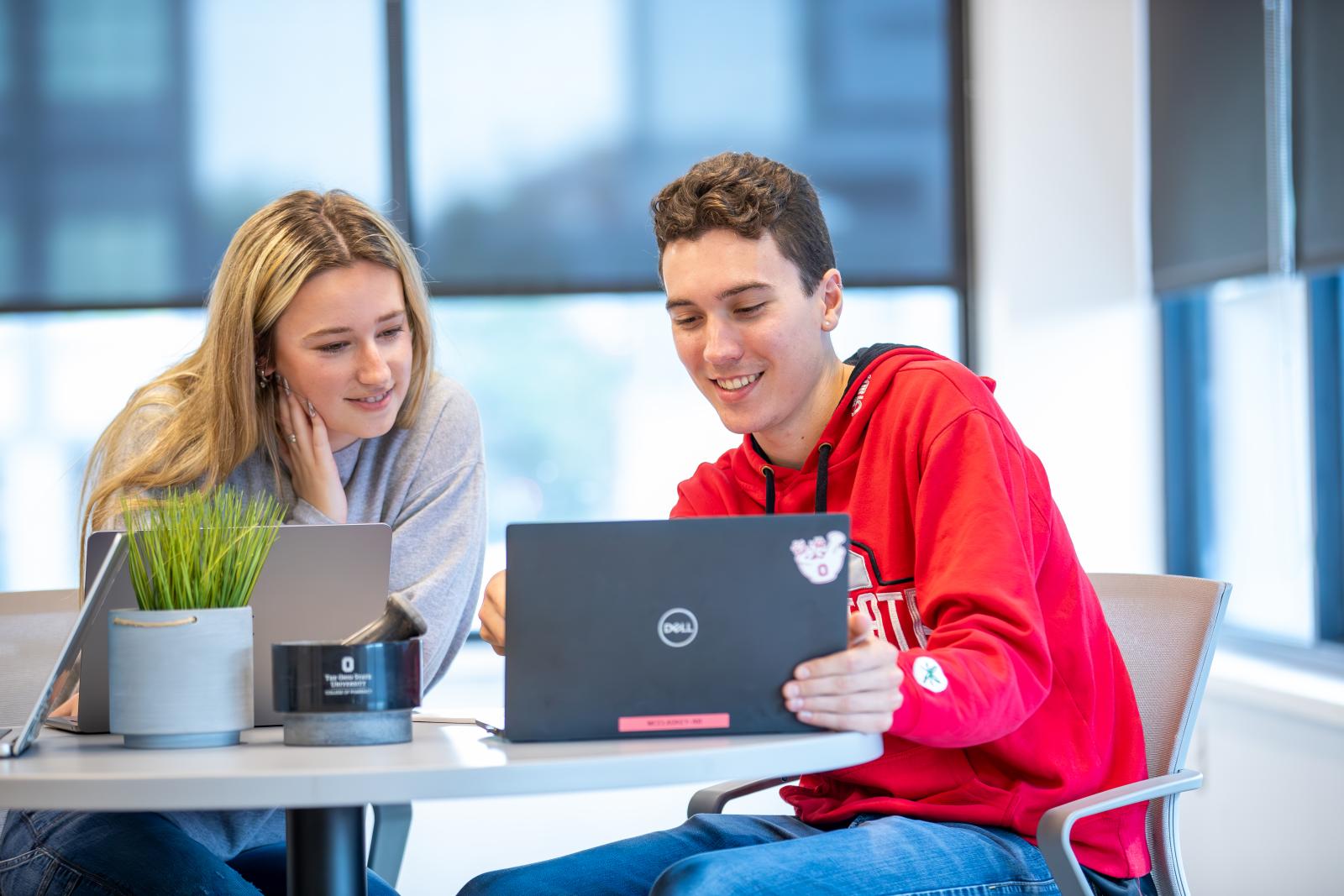
The module not only gave Dr. Downing and Plahovinsak a chance to pilot AI learning tools in the classroom, but it formed a research base for the college’s use of AI. Embedded within the course were learner-analytics tracking and an IRB-approved research plan.
“As someone from industry, teaching a lot of industry hopefuls, I was very interested in exploring the application of AI and how students needed to be aware of its career-ending or strengthening potential,” Plahovinsak reflected. “Dr. Downing’s undergraduate lens focused more on the introduction of responsible use in general, and Steven provided us the tools and technical support to unearth those answers.”
As students were introduced in the module to fundamental concepts, such as how generative AI works and academic/research integrity considerations, they were also contributing survey responses on the success of their learning with these tools. Outcomes of the resulting surveys indicated statistically significant knowledge gains among students.
“The data gathered during the fall 2024 and spring 2025 semesters really excited other instructors at the college and opened the door to more AI in the classroom.” Dr. Downing said.
Following the impressive results of the team’s study, Nagel’s AI Fluency module has been picked up by Ohio State’s central administration for use across the university, and he serves as a staff leader for Ohio State’s AI Fluency initiative.
AI Task Force provides structure for instructional implementation
The success of Nagel, Plahovinsak and Dr. Downing’s AI module coincided with Dean Deanna Kroetz’s, PhD, BS Pharm ’85, interest in incorporating AI learning into the pharmacy curriculum.
“The emergence of AI into all aspects of society has been happening at an unprecedented speed,” Dean Kroetz said. “As educators, it is our responsibility to prepare our students to navigate this changing landscape.”
In the spring of 2025, Dean Kroetz created the AI Task Force, led by Nicole Kwiek, PhD, professor and senior associate dean for academic affairs and educational innovation, and Dr. Downing. The task force would build off the work of Nagel’s team to develop a game plan of how AI could be implemented into college curricula and made accessible to students, staff and faculty.
"Our primary goal as a team was to move from abstract concepts to a tangible, actionable roadmap,” Dr. Kwiek said. “This included building pharmacy-specific AI learning outcomes for students, faculty and staff, and creating detailed curricular maps that scaffold AI content year-by-year within our BSPS and PharmD programs.”
Dr. Downing co-chaired the committee’s exploratory phase, which developed core competencies for student, faculty and staff AI fluency. The creation of those competencies was grounded by the initial studies of Dr. Downing, Nagel and Plahovinsak.
The College of Pharmacy’s AI Fluency competencies are:
- Technical understanding
- Critical evaluation and ethical considerations
- Discipline-specific applications

“We are just scratching the surface this year while continuing to monitor how AI will change health care in the near future.”
For the implementation phase of the task force’s work, Dr. Kwiek; Leslie Newman, PhD, assistant dean for undergraduate studies and professor; David Matthews, PharmD, BCACP, assistant dean of pharmd studies and associate professor, and other faculty and staff mapped the competencies into the undergraduate and PharmD curricula.
“By incorporating AI across contexts, particularly in ethics courses and throughout case-based learning, we create opportunities to model and discuss responsible AI use within authentic pharmaceutical sciences scenarios,” Dr. Newman said. “This guided exposure within an educational framework allows us to establish norms and critical thinking habits before students enter professional practice, where the stakes are considerably higher.”
Across the college, instructors and staff are eager to engage with the new technology in classrooms, labs and a multitude of studies. Thanks to the work of the task force, there are clear expectations and guidance on how members of the college can safely ride the AI wave.
“We are just scratching the surface this year while continuing to monitor how AI will change health care in the near future,” Dr. Matthews said. “This is going to be a moving target.”
For Nagel, the resident AI education expert, the goal is clear: empower students to pair their growing disciplinary expertise with emerging AI tools, not as a shortcut, but as a thinking partner that prepares them for an ever-advancing future of pharmacy and health care.
“In the past, we’ve seen these moments of huge excitement and wariness surrounding emerging technologies like 3D printers, iPads, the dawn of the internet,” Nagel noted. “Technology always brings a hype cycle. This just feels a bit different, with generative AI not only recognizing patterns but generating completely new lines of thinking. That’s why we must help students learn how to use it responsibly.”