P4s find growth through summer APPE rotations in southeast Ohio

In rural healthcare, every resource counts.
That’s the lesson that alumna, preceptor and Athens, Ohio resident Sarah Adkins, RPh, PharmD ’10, BCACP, hopes Doctor of Pharmacy (PharmD) candidates from The Ohio State University College of Pharmacy take with them.
This summer, 11 fourth-year PharmD candidates (P4s) engaged in Advanced Pharmacy Practice Experiences (APPEs) in southeast Ohio. It was the college’s largest APPE cohort in the area since 2020.
Students complete APPEs in their final year of the PharmD program, applying the skills they’ve developed over three years of hands-on learning through the college's Inquire, Innovate, Involve (I3) curriculum.
Through their APPEs, students accrue at least nine months of high-quality field experience under the guidance of preceptors. From the pharmaceutical industry to academia to rural community care, P4s have the chance to broaden their horizons.
“Our students see huge boosts in confidence and problem-solving thanks to their time spent on APPE rotations,” said Julie Legg, PharmD ’96, FNAP, BS Pharm ’92, assistant dean of experiential education and associate professor of practice. “By giving them this final year of additional experience, they can engage with unique communities, develop meaningful relationships with their preceptors and apply their didactic learning to the real world.”
The students in southeast Ohio this summer completed APPE rotations at:
- Rising Suns Nonprofit Pharmacy
- Shrivers Pharmacy and Wellness Center
- OhioHealth O'Bleness Hospital and Family Medicine Clinic
Across these locations, students gained experience in ambulatory, community and specialty pharmacy while supporting the functions of their APPE sites. They provided treatment and education to patients, designed community health initiatives, and much more.
“There’s historically been a conflict in students’ desires to experience care outside of a major city and the obstacles in place to get to southeast Ohio for a full month of rotations,” said Rebecca Lahrman, PharmD, assistant professor of practice, clinical pharmacist and Athens-area preceptor. “This year, we took a major step forward by securing temporary housing for our rotating students on the Ohio University campus.”

Tuning into community members’ needs
In southeast Ohio, households often lack reliable internet, phone access, transportation, or nutritious food. Healthcare facilities also face funding and staffing challenges that make acute care harder to access in these areas.
For more than a decade, Dr. Adkins has worked to address those hurdles through ambulatory care, public outreach efforts and running a nonprofit pharmacy. At every turn in her career, she has made time to mentor Ohio State students.
“Students from city campuses like Ohio State often don’t know the rural healthcare landscape and, in particular, aren’t familiar with the community members,” Dr. Adkins said. “Getting into the space allows them to realize just what obstacles people are facing and also shows them the individuals who live in and support these communities.”
For P4 candidate Fatima Mahmood, who shadowed Dr. Lahrman for four weeks at OhioHealth O’Bleness Family Medicine Clinic, that meant learning what resources were and weren’t available to her patients.
“On rotation, Dr. Lahrman and I often had to get creative to ensure that patients could follow up on medications and get refills,” Mahmood said. “It’s really satisfying to work closely with patients, meet them where they are with the available resources, and set them up for success until you see them again.”
As a frequent student volunteer at free clinics in Columbus and Cincinnati, Mahmood said healthcare obstacles were familiar to her, but tackling them in this rural environment presented new challenges.
“Our local hospital has only 100 beds. It does not have a pacemaker-compatible MRI, and it has two helipads because it’s not uncommon for emergency cases to be life-flighted to a center with more resources,” Dr. Lahrman said. “When students step into a space like this, they’re in a position where they have to think very critically about the difference between clinical practice guidelines and the logistics of providing healthcare with what’s available to them.”
Mahmood found herself encouraged by the experience in a patient-facing ambulatory care setting, enjoying the personal work of getting to know the community’s needs and available resources, and tailoring solutions to each patient.
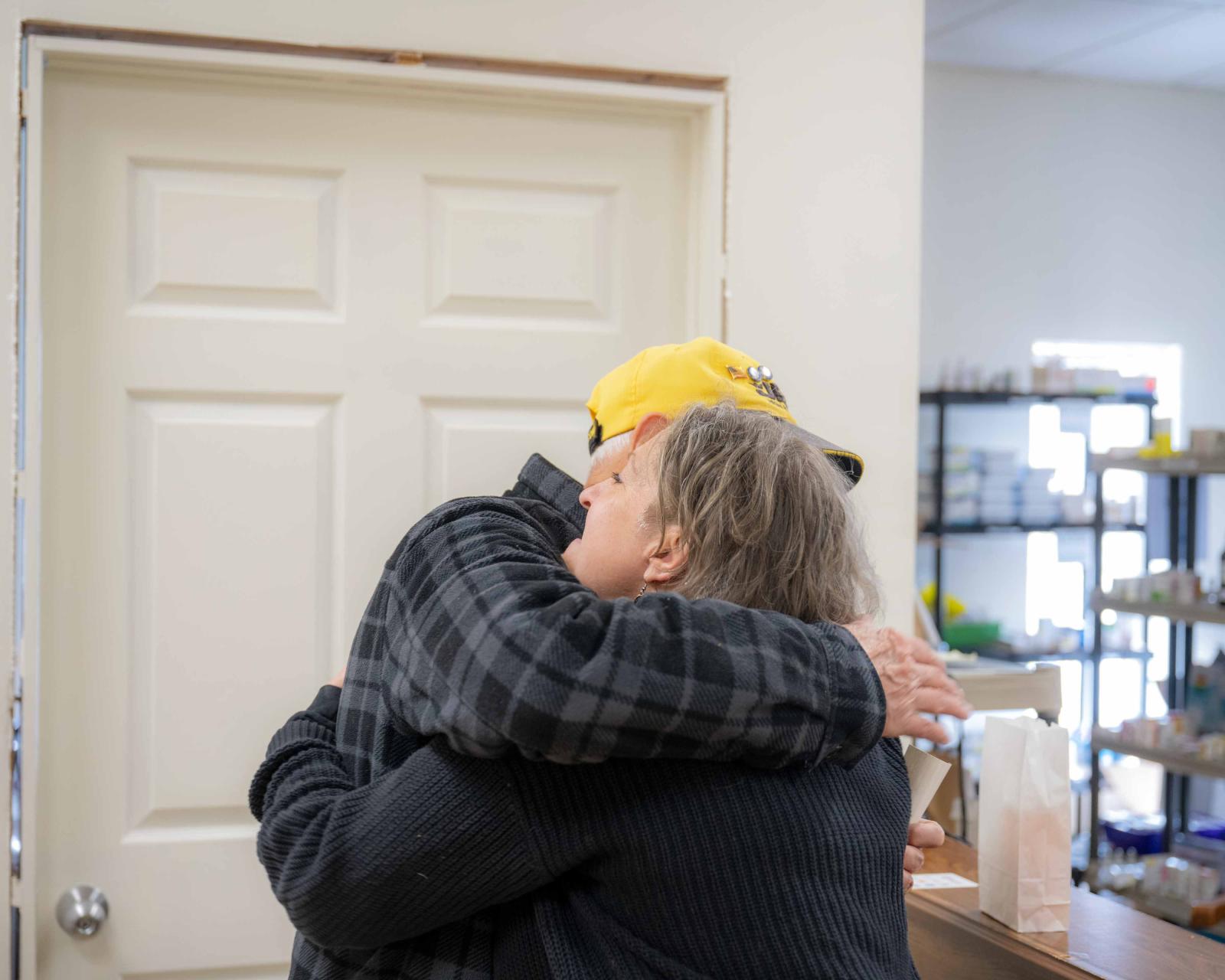
P4 candidate Nick Weaver similarly found himself enjoying the personal feel of rural healthcare.
“I think one thing that differentiates rural pharmacy from some of those in Columbus is the sense of community,” Weaver said. “Often, I would see patients come in and know one another and the staff within the pharmacy.”
Originally from southeast Ohio, Weaver rotated with Rising Suns Nonprofit Pharmacy and Shrivers Pharmacy and Wellness Center, both well-known for their community ties.
At both locations, Weaver supported the implementation of health initiatives designed for the pharmacies’ patient populations.
“My biggest surprise on rotation in the area was seeing how small nonprofit pharmacies like Rising Suns function,” he said. “Their workflow was so unique compared to other pharmacies, and it helped me to understand that every place has its unique traits, systems and methods of problem-solving.”
Expanding experience—and patient care
While APPE rotations provide students with opportunities to develop as practitioners, their presence provides additional help to preceptors and practice sites in return. That additional capacity can be particularly meaningful in rural communities, where healthcare organizations may already be managing limited staffing and resources.
“Encouraging students to engage with rural populations not only supports their development as holistic practitioners, but it furthers the College of Pharmacy’s strategic goals to expand pharmacy practice to meet the needs of all Ohioans,” Dr. Legg said.
Collaboration between southeast Ohio preceptors and the College of Pharmacy's experiential education team, practice faculty and Pathways and Recruitment Opportunities for Pharmacy Exploration and Learning (PROPEL) program helped make the rotations possible. Funded by the McKesson Foundation, PROPEL is designed to prepare PharmD graduates to provide care in rural and urban communities through experiential learning.
“Our pharmacy practice strategic priority is to transform patient care in all settings,” said Bella Mehta, PharmD ’97, FAPhA, BS Pharm ’95, clinical professor and chair of the Division of Pharmacy Practice and Science. “Through expanded opportunities for practice and training, we are focused on integrating our students into rural and urban settings to improve medication access and use. These advanced patient care experiences for our PharmD students are key in ensuring that we are helping to provide care in the communities we serve across Ohio.”
For students considering what comes after pharmacy school, Dr. Lahrman said exposure to smaller healthcare settings can broaden their career choices.
“So many students are looking for residencies or placement in large health centers immediately upon graduation,” Dr. Lahrman said. “That might be a great fit for them, but coming into these rural spaces provides a glimpse at how rural areas and smaller healthcare entities can offer work-life balance and tight-knit communities, and give them direct access to wonderful mentors.”
Regardless of where the students’ careers take them, their APPEs in southeast Ohio underscored the importance of understanding the communities they serve and making the most of available resources.
In communities where every resource matters, those skills enable pharmacists to become resources themselves.