Broadening access to health care careers with new Biotech CState Preferred Pathway

This article was published in The Script Magazine – Spring 2026.
The Ohio State University has a long history of partnering with community and technical colleges to make four-year degrees more accessible via pathway programs.
These continuing education programs help students seamlessly transfer their credits to a corresponding degree program at Ohio State, giving them greater flexibility when it comes to financial commitment, early degree decision-making and scheduling.
Since 2017, students at Columbus State Community College (CState) could transfer credits to the Ohio State College of Pharmacy’s Bachelor of Science in Pharmaceutical Sciences (BSPS) program via the Drug Discovery and Development or Health Care Professions Preferred Pathways – both transfer tracks existing at CState.
“The efficiency of these programs cannot be understated,” said Leslie Newman, PhD, assistant dean for undergraduate studies and assistant professor at the College of Pharmacy. “They offer cost-effective options for our students to achieve their degree in pharmacy, and the curriculum pathway itself is evidence-based and effective. It’s a fantastic way to support the goals of our students and the future of health sciences.”
With the help of advisors at their home institution, students select a Preferred Pathway and confirm that their selected courses meet all the requirements to transfer to Ohio State. Faculty and staff at the College of Pharmacy then connect regularly with CState partners to ensure that matriculants complete commensurate prerequisites and don’t face unexpected barriers when it comes time to transfer to the four-year institution.
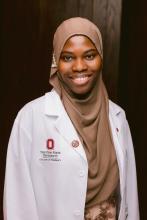
"CState gave me the space to understand my goals, compare requirements and take ownership of my future.”
Ohio State PharmD candidate Muktharatullah Lawal-Muili, BSPS ’26, utilized a CState Preferred Pathway before making her home at Ohio State.
“Applying to colleges was a bit crazy for me, so the flexibility that CState offered for admissions and degrees was really important,” Lawal-Muili said. “The transition from CState to Ohio State was surprisingly easy because I planned ahead and was able to use the pathway structure provided by the CState and Ohio State collab. CState gave me the space to understand my goals, compare requirements and take ownership of my future.”
Over 100 students like Lawal-Muili have taken advantage of the pathways and completed BSPS degrees at Ohio State, and having seen the efficiency and satisfaction rates of the two existing pharmacy pathways, it felt like the natural next step to expand offerings for incoming student interests. So, in Autumn 2025, Ohio State and CState launched a new Pharmaceutical Biotechnology Pathway.
The new pathway specialty was prompted by substantial growth in the biotechnology industry, particularly in central Ohio, which has seen a spike in attention, funding and workforce demand.
Nicole Kwiek, PhD, senior associate dean for academic affairs and educational innovation and professor at the College of Pharmacy, is one of the primary connectors between the CState and Ohio State pharmacy programs. She highlighted the importance of the undergraduate curriculum's incorporation of biotechnology training as its role in the world of pharmacy grows.
“The BSPS major dovetails wonderfully with the field of biotechnology,” Dr. Kwiek said. “Those interested in pursuing pharmaceutical biotechnology in some fashion can enter through the pathways program with strong biotech training from CState and then receive complementary drug science training offered in the BSPS program. We see this as a strong opportunity to supply our local biotech companies with the workforce they need to continue creating therapeutic breakthroughs.”
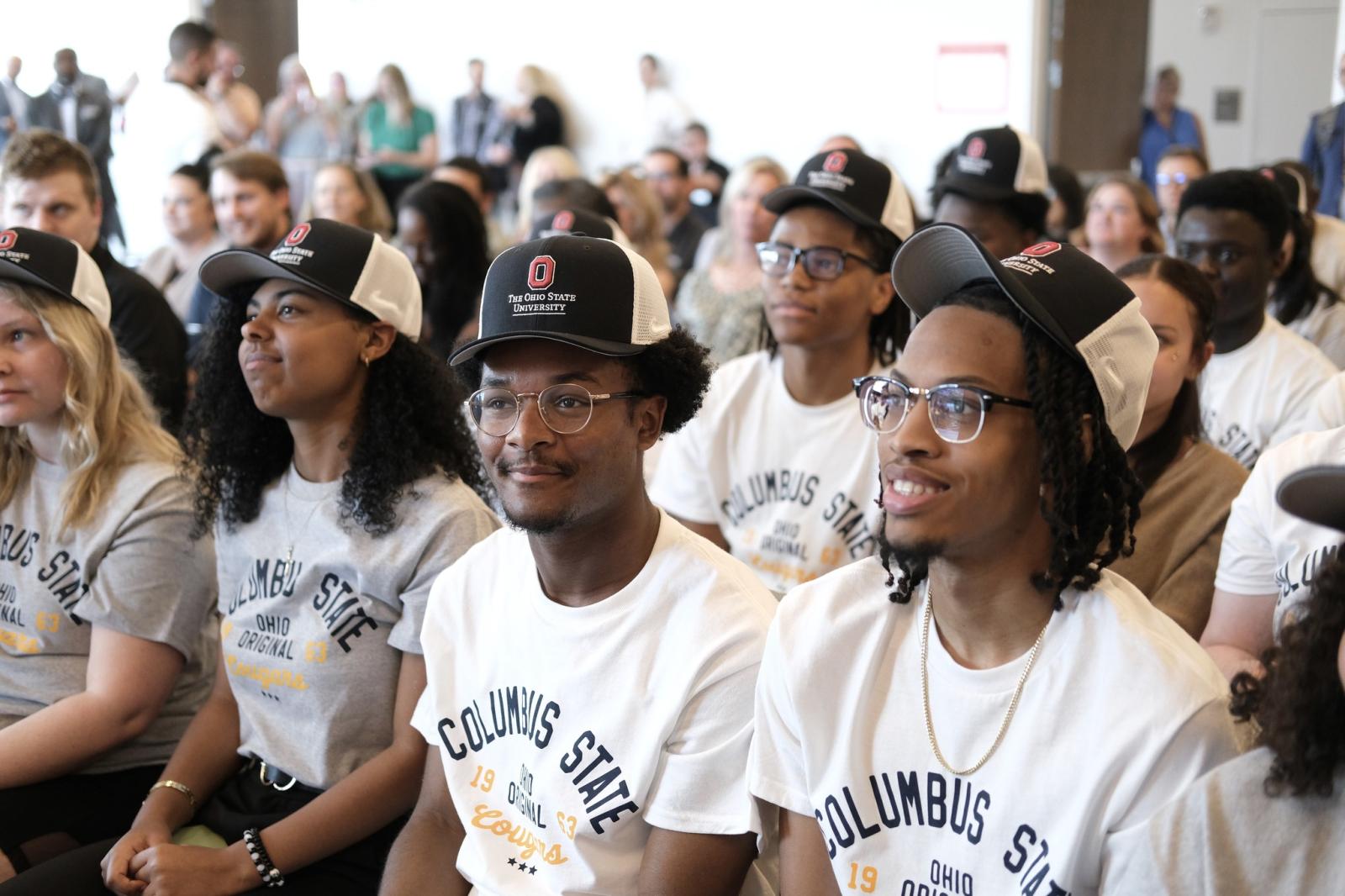
Sacha Tadros, PharmD, associate professor and pharmacy technician program director at CState, is one of the co-developers of this latest bridge between CState and the College of Pharmacy.
“The coursework at CState mirrors the foundational science courses students complete in the first two years of a bachelor’s program, while adding meaningful hands-on laboratory experience early in their education,” Dr. Tadros said. “Students become comfortable working in professional-style lab environments, following protocols, analyzing data and thinking critically about scientific processes. When they transfer, the expectations of upper division coursework feel familiar rather than overwhelming.”
There is plenty of anticipation among biotechnology pathway coordinators for future collaborations and experiential learning with the ever-expanding list of Columbus biotech and pharmaceutical companies.
“Beyond providing an in-demand pathway for our students to explore, this expansion really supports the strategic plan of the college,” Dr. Kwiek said. “One of our guiding pillars in the plan is education, specifically, preparing our students to enter industry and other health care roles at the top of their practice. We also believe in opening as many matriculation pathways as possible to offer a range of students access to the field.”
The first class of biotechnology students began their pathway track in Autumn 2025, and Dr. Tadros reports strong interest from students invested in biotechnology as an academic and career path.
“This program is a strong example of how Columbus State supports students as they work toward their next academic and professional goals,” she said.
Maintaining educational support systems like these pathways ensures sustainable student access to the health sciences, a key goal in the college’s Pathways and Recruitment Opportunities for Pharmacy Exploration and Learning (PROPEL) program, which is funded by a grant from the McKesson Foundation.
As the biotechnology pathway gets off the ground, CState and the College of Pharmacy’s Office of Recruitment and Admissions (ORA) remain hard at work to advertise the advantages to students.
“One of our biggest points of pride with the BSPS program has always been its flexible curriculum that allows students to explore,” Dr. Kwiek said. “Building out this new transfer pathway supports that value. Now, our undergraduates can better tailor their course of study to their needs and interests.”