Student-created course eases transition into PharmD program
This article was published in The Script Magazine – Autumn 2026.
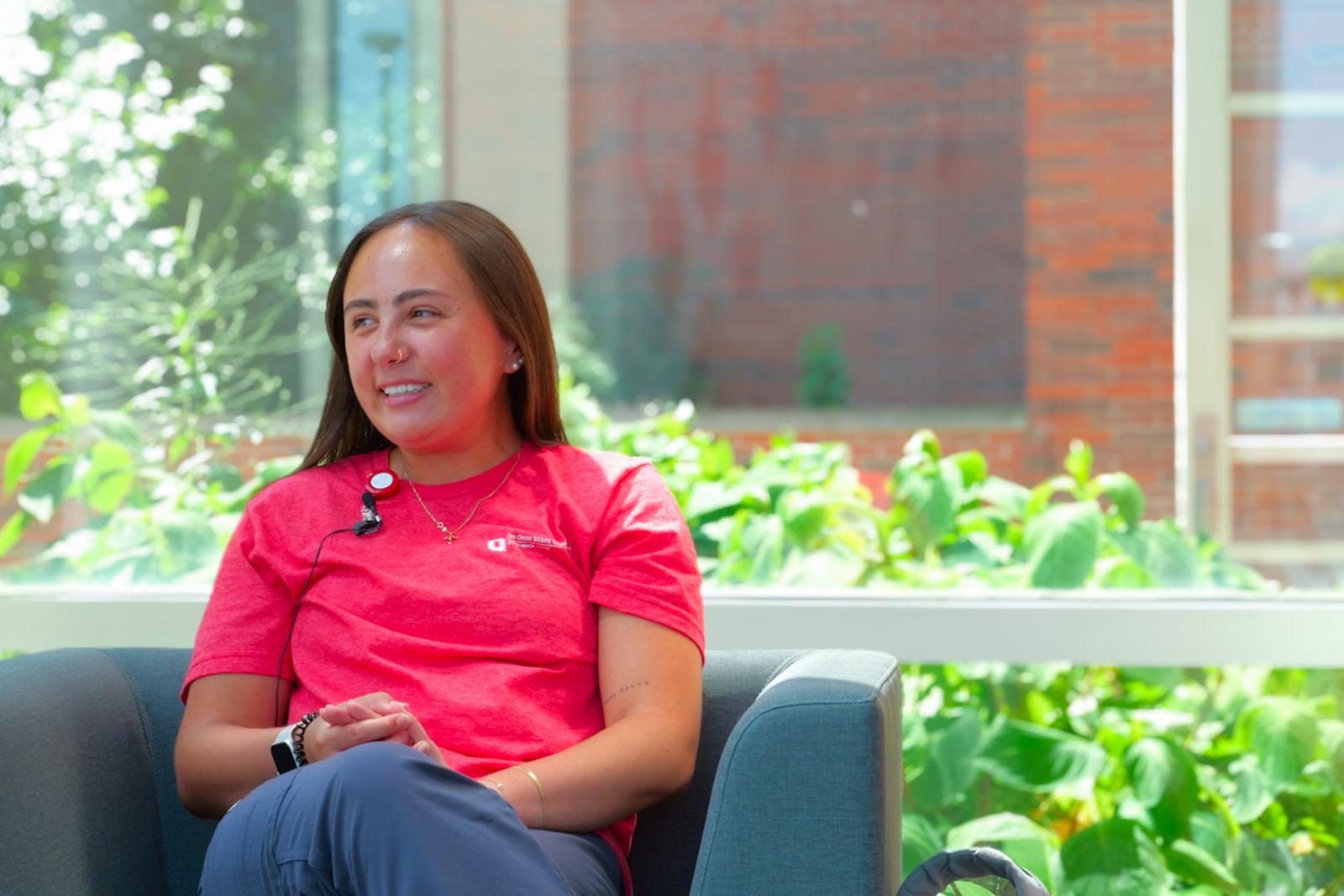
Ashley Swisshelm, BSPS '24, has it figured out, and she’s sharing her secrets to success.
Or, at least some tips on how to survive the PharmD program.
“Moving from an undergraduate to professional program is unlike anything a college student has experienced,” said Swisshelm, who is entering her fourth year of PharmD and seventh year at The Ohio State University College of Pharmacy. “I definitely know the struggles that come with the workload, but luckily, I’ve also found a lot of solutions for myself and made amazing connections to get me to where I am today.”
From forming lifelong bonds, to getting her study schedules down to a science, Swisshelm has put in the work when it comes to academic, professional and personal aspects of life.
Since autumn 2024, she has worked with Leslie Newman, PhD, assistant professor for practice and assistant dean of undergraduate studies, to leverage that experience and design a transitions course for incoming PharmD students.
The two created the course “Surviving to thriving: your prescription for pharmacy school success.”
“Hard to say, easy to take,” Swisshelm quipped.
She was recruited for the course design by Dr. Newman and Nicole Kwiek, PhD, clinical professor and senior associate dean for academic affairs and educational innovation.
“This course helps to normalize the adjustment process in going from an undergraduate to professional student,” Dr. Newman said. “It also helps to introduce professional identity formation sooner and connects students to support systems.”
Throughout the experience, Swisshelm had the mentorship and collaboration of Dr. Newman and Professor Emeritus James McAuley, RPh, PhD, FAPhA.
The course team sought perspectives from PharmD students across the spectrum, from P1s to P4s, industry interns to technicians.
With an intended audience of Early Assurance Program (EAP) students in their third year of the Bachelor of Science in Pharmaceutical Sciences (BSPS) program, the course teaches students how to manage the range of challenges associated with the transition from college to professional program.
Over half of each BSPS class enrolls in EAP, which means that they’ll transition into the PharmD program during their fourth year of undergraduate curriculum.
“EAP is a great option for students committed to a pharmacy career,” Swisshelm said. “They’re saving a year of schooling, but that also means they start the PharmD program a year earlier. As they transition, a lot of students are surprised by the changes in how they’re expected to compose themselves in a professional program, or how much they may need to change their study habits.”
Focuses of the course include:
- PharmD curriculum
- Time management
- Study skills
- Experiential, career and professional development
- Financial aid
- Mental health and wellness
- Professionalism
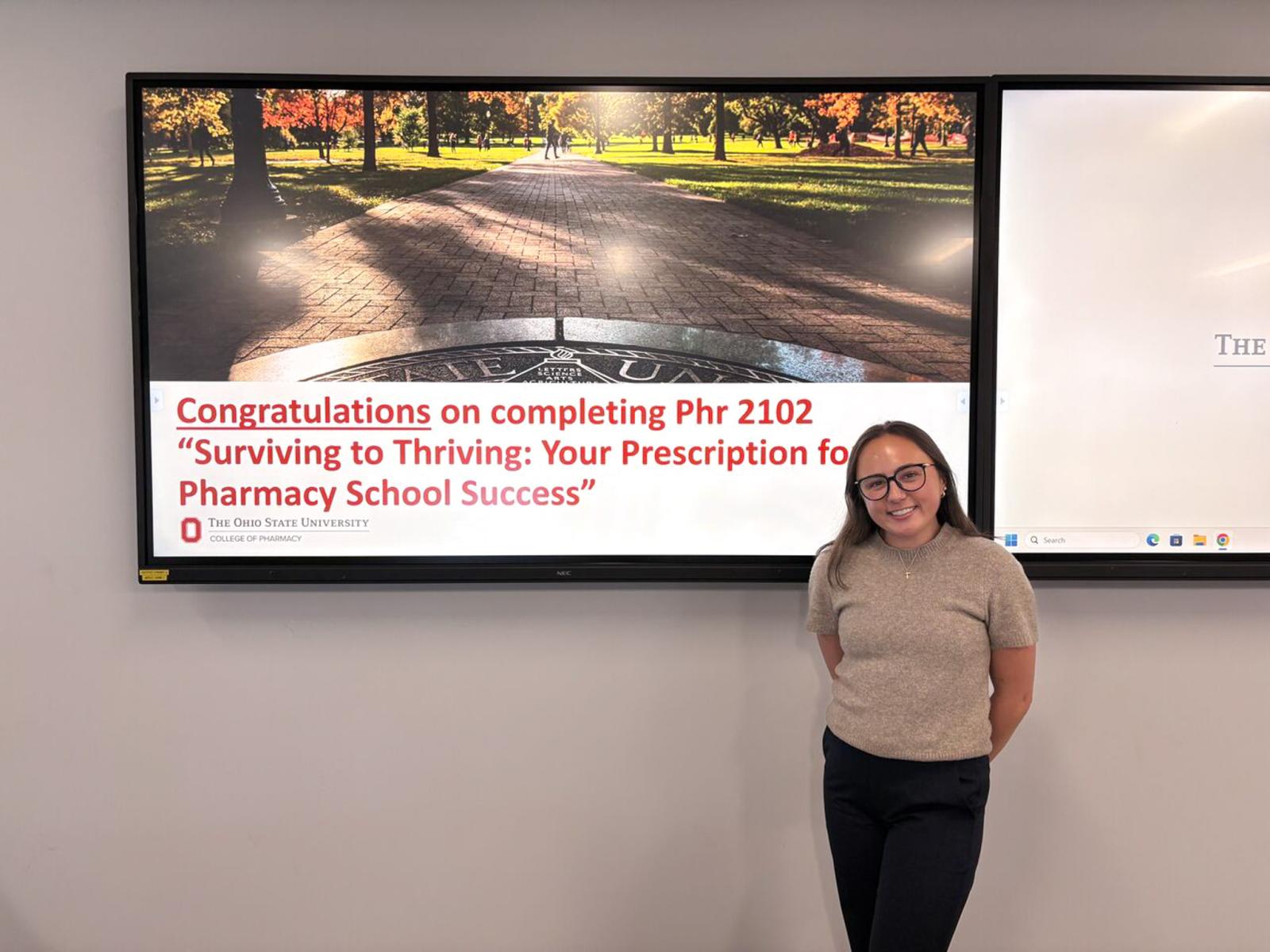
“One of my favorite parts of developing this course was thinking back to my early days in the PharmD program and considering who helped me out the most during that time,” Swisshelm said. “That was an exercise to recall what barriers you face as a new student, and it also reminded me how grateful I am to belong to a college with such a strong support system.”
On a campus of over 50,000 students, pharmacy students may get overwhelmed at the idea of maintaining a social life and finding the necessary support to make it through four academically challenging years. But Swisshelm and her peers, and mentors who informed the design of the course, are strong believers in the adage: “you can’t make a small school big, but you can make a big school small.”
Throughout the course’s duration, community building is constant, with students meeting new staff, faculty and students throughout the college as they engage with each topic.
Students are visited by members of the Office for Career Success during the financial aid and time management sections. Assistant Clinical Professor Victoria Williams, PharmD ’19, BSPS ’15, helps with professionalism.
Once approved by central university registrar, the course’s team ran a test section in spring 2026, with Swisshelm serving as the inaugural student instructor. When the class officially launches in spring 2027, the student teaching position will continue to be central to the class.
“By the time Ashley took ownership of the course, it appeared to be a natural progression where she was able to draw on her own principles and instincts as a student-educator,” Dr. Newman said. “Our hopes for students in this course include helping them feel prepared, supported and comfortable asking for help.”
Instructing this self-designed course as she enters her final year of pharmacy school is a full-circle moment for Swisshelm. She is proud to look back on this experience and her time in pharmacy school as a success, while passing her lessons to the students following in her footsteps.
“Life does not stop for pharmacy school,” Swisshelm said. “Regardless of whether your challenges are in the classroom or not, understanding how to utilize your tools and connections at the college is what will ultimately guarantee your success. I’m confident that this class will ease the transition for new PharmD students and get them started on the right foot.”