OPA receives $2 million to improve rural Ohio healthcare, leveraging pharmacy network

Approximately one quarter of Ohio’s population lives in a rural area – one of the largest rural populations of the midwestern states.
Despite the millions of people who call rural Ohio home, healthcare in these areas is often inaccessible, with many communities experiencing higher rates of chronic disease and ongoing shortages of healthcare providers.
Now, Ohio pharmacy professionals have a major opportunity to address those shortcomings.
On August 26, the Ohio Department of Health (ODH) released funding from the Rural Health Transformation Program (RHTP), a federally supported program designed to aid rural communities across Ohio.
The Ohio Pharmacists Association (OPA) was awarded $2 million to strengthen healthcare delivery in rural Ohio through pharmacy integration, workforce development and the expansion of clinical offerings.
“This award represents a transformational opportunity for rural healthcare in Ohio and a historic milestone for the Ohio Pharmacists Association,” said Sara Kilpatrick, chief executive officer at OPA. “We are grateful for the opportunity to partner with healthcare leaders across the state to build innovative, sustainable models of care that better serve Ohio patients where they live.”
This is the largest grant in OPA history, a feat made possible in part by expertise at The Ohio State University College of Pharmacy and numerous pharmacy professionals across the state of Ohio.
“To see this come together is gratifying and motivating,” said Jennifer Rodis, PharmD, FAPhA, associate dean for outreach and engagement and clinical professor at the college. “As a college of pharmacy within a land-grant university, we are dedicated to enhancing the lives of Ohioans through our practice, teaching, research and outreach. These new opportunities to work with OPA and engage with rural health transformation are the result of over a decade of investment through faculty immersion in southeast Ohio, student rotations and service development and advocacy through college programs and initiatives.”
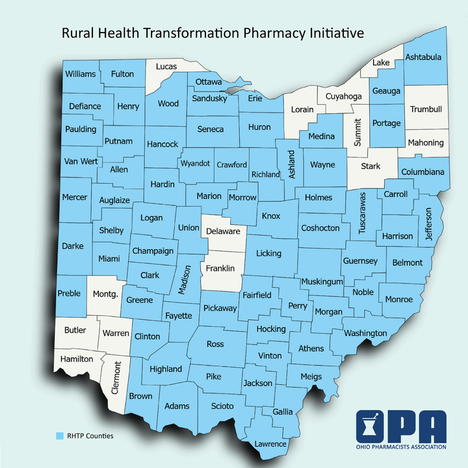
The pharmacy component of Ohio’s RHTP centers on three primary goals:
- Connecting pharmacies to CliniSync, Ohio’s health information exchange (HIE)
- Expanding pharmacist-led clinical services
- Integrating pharmacies into the broader healthcare system
OPA aims to develop a network of rural pharmacies across the state with sustainable strategies and tools to improve patient outcomes, medication safety, access to care and healthcare system efficiency.
“Ohio’s proposal will help connect pharmacies in 73 rural counties with an HIE, supporting safe and more coordinated patient care,” said Myriam Shaw Ojeda, RPh, PharmD, assistant professor of practice at the College of Pharmacy and director of pharmacy extension and public health initiatives at OPA. “The larger goal is to make more care available to patients where they live.”
Through her joint appointment, Dr. Shaw Ojeda helped develop the RHTP pharmacy proposal with OPA members and partners last spring. Now, with funding secured, she’ll step up to lead alongside the OPA team as they put those funds to work.
“The College of Pharmacy’s partnership with OPA was an important factor in making this work possible,” Dr. Shaw Ojeda emphasized. “Through my joint appointment, I was able to dedicate substantial time to developing the proposal. The college’s investment in faculty who work directly within external organizations creates the capacity to identify opportunities, secure funding and translate academic and professional expertise into programs that reach communities across Ohio.”
Currently, Jennifer Sabatino, PharmD ’09, director of the Ohio State Division of General Internal Medicine (GIM) PGY2 Ambulatory Care Residency Program, and Kayla Rizzo, PharmD ’25, BSPS ’22, GIM PGY2 resident, are developing a statewide needs assessment. OPA will use this tool to determine immediate priorities in rural communities and begin providing support to pharmacy teams in those areas.
As the needs assessment wraps up, OPA will lean on faculty expertise across Ohio to develop training and implementation resources for pilot rural pharmacies. These tools will be essential to the expansion of pharmacist-provided clinical services, such as point-of-care test-and-treat services, remote patient monitoring and managing chronic conditions.
Ohio State faculty, staff and student pharmacists will also assist with related advocacy campaigns, advisory committees and hands-on support as pilot programs take off.
“Collaborating with professional organizations like OPA allows Ohio State and our partners to bring our expertise together for a common goal,” Dr. Rodis said. “When we work together, we realize synergy in ideas, networks and capacity to make change.”
To guide the implementation of RHTP pharmacy programs, OPA will collaborate with pharmacy leaders, health systems, rural healthcare providers, patient representatives and others across the state.
“With this initiative, we have the chance to expand what rural pharmacy practice can look like,” Dr. Shaw Ojeda said. “I am especially excited about what we will learn from rural pharmacies and their patients and communities. I feel incredibly privileged to be part of this work and to serve rural Ohioans in this way.”
This major grant marks an important step in expanding rural healthcare. With the available funding and expertise, Ohio’s network of pharmacists will transform the pharmacy space with sustainability in mind.
"The RHTP addresses the needs of patients who lack easy access to the healthcare they need to live healthy and productive lives,” said Deanna Kroetz, PhD, BS Pharm ’85, dean and professor at the College of Pharmacy. “We are excited to be a part of the efforts to improve pharmacy services across all Ohio counties.”