The next chapter: Summer Powell carries undergraduate research into PhD program
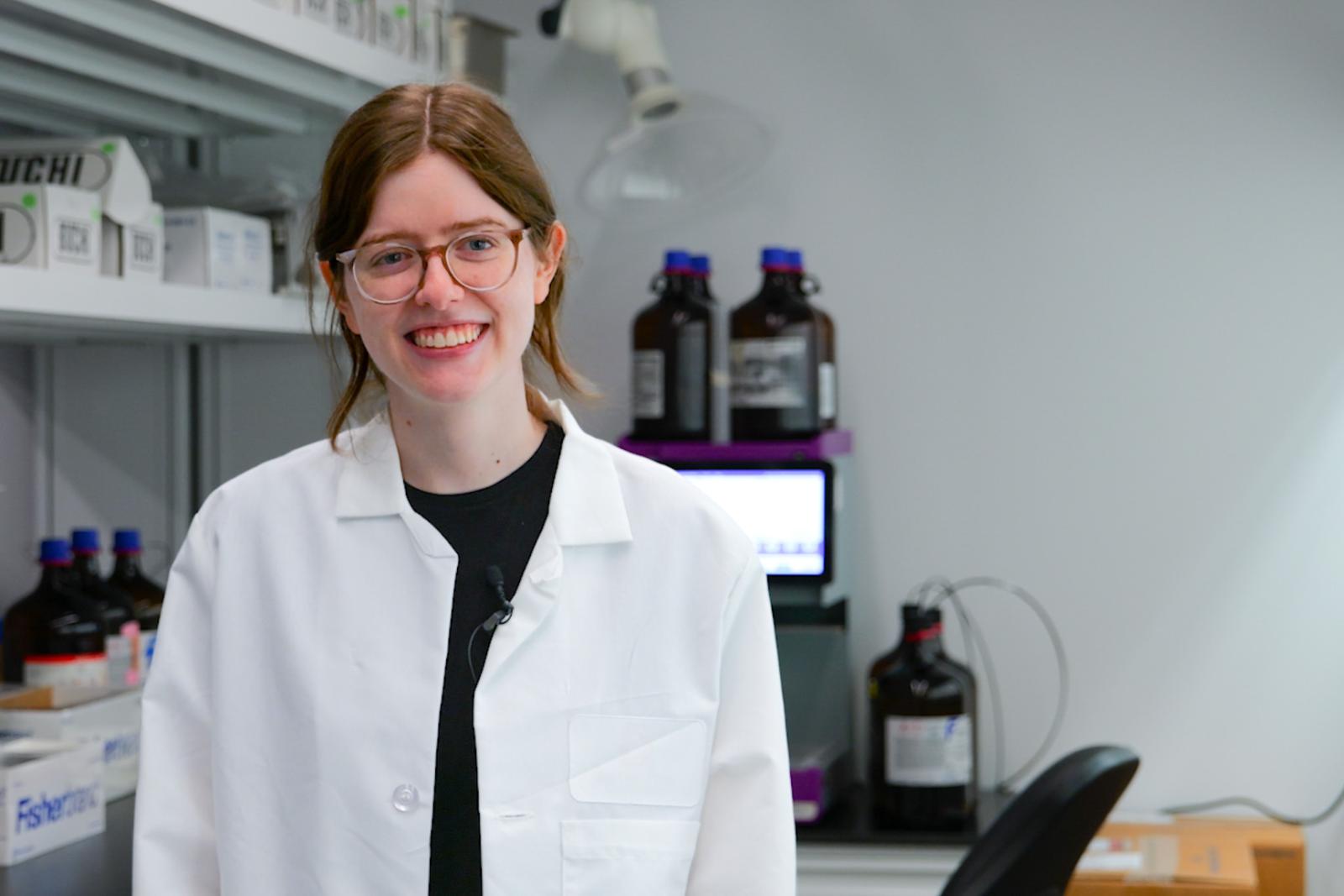
Summer Powell, BSPS ’26, is not allowed to remain in the Peterson Lab.
The decision by Blake Peterson, PhD, professor and chair of the Division of Medicinal Chemistry and Pharmacognosy, was not the result of any shortcomings of Powell, who has worked in the lab as an undergraduate researcher since 2022.
Quite the contrary. With Powell entering the PhD program this autumn, Dr. Peterson believes the time is right for her to grow as a scientist beyond the Peterson Research Group.
“I’ve achieved a lot of professional and personal growth as a researcher,” Powell reflected. “It was at least six months before I was comfortable explaining to my family what I did in the lab. Today, I can proudly look at the knowledge that I’ve amassed and my ability to share that information confidently.”
In the Peterson Lab, researchers design, synthesize and discover small molecules that offer potential cancer therapies while also studying associated immune cells that affect the proliferation of those cancer cells. The lab creates and utilizes fluorescent molecular probes as tools to aid in these drug discovery efforts.
For the last two years, Powell has turned her experimentation with these tools toward myeloid leukemia, liver cancer and primarily, breast cancer.
“Having devoted years to the study of breast cancer, I’m really passionate about seeking answers,” she said. “Especially since breast cancer is very heterogeneous, meaning that patients face a lot of different subtypes and outcomes depending on their diagnosis. This makes the search for personalized treatment extremely important to improve patients’ quality of life.”
"I’m just the biggest fan of how the BSPS program introduces new learners to areas of medicine that they haven’t explored yet.”
Powell was introduced to undergraduate research opportunities through her Bachelor of Science in Pharmaceutical Sciences (BSPS) coursework, which included the “Molecules to Medicine” course.
“’Molecules to Medicine’ is something that all BSPS students take, and it really illuminates the complexity and mysteries of the drug discovery process,” she said. “That sparked my interest and really got me to where I am today. I’m just the biggest fan of how the BSPS program introduces new learners to areas of medicine that they haven’t explored yet.”
Inspired, Powell landed her impactful student researcher position with nothing more than cold calls and an eagerness to learn.
“As a hands-on learner, I knew that I wanted to get into research,” Powell said. “While I gained independence in the role and began to fit into the larger workflow of the Peterson Lab, it was clear how challenging and intellectually stimulating this line of work is. It became important to me to really consider it as a career path.”
The passion Powell holds for her work is evident. She practically glows in any conversation about her breast cancer research utilizing these fluorescent probes.
“Over her time in the lab, Summer developed a high degree of independence and technical versatility,” Dr. Peterson said. “Through her perseverance, she successfully identified two probes and more stable protein mutants that are essential for our ongoing work. She built a strong foundation, spanning both chemical synthesis and mammalian cell culture, and has become a well-rounded and capable scientist.”
Since beginning as a Peterson trainee researcher, Powell has risen to the role of mentor for new undergraduates. She credits much of her success and experience to the guidance of graduate students and technicians in the Peterson Lab.
“As a researcher in the lab, I’ve joined a community that’s working hard to do the best for patients,” Powell said. “Luckily, I’ve spent these early years of training surrounded by lab mates who never treat a question as though it’s silly. It’s been a safe space for me to endlessly build my skillset.”
With four years of mentorship in a cutting-edge medicinal chemistry lab, Powell has become a self-sufficient researcher who combines chemistry and biology techniques to support early-stage drug discovery for disease states across the spectrum.
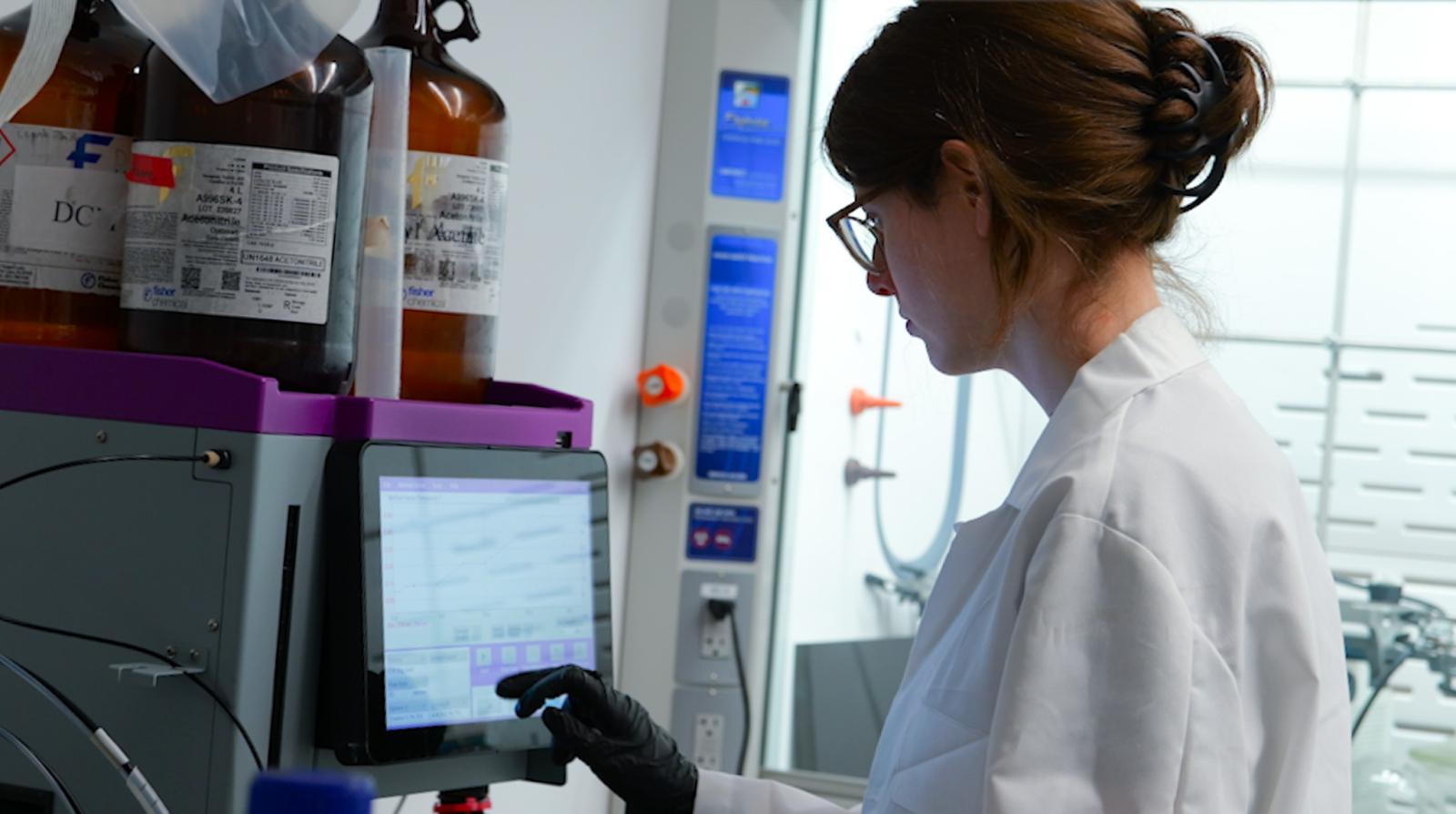
In a new program and a new lab, Powell will exercise those skillsets in new ways.
“Stepping outside of her comfort zone is important for Summer’s scientific growth,” Dr. Peterson said. “Doing rotations with different research groups will expose her to new methodologies, alternative ways of thinking and diverse mentoring styles. This broader perspective will allow her to find the niche where she can thrive and build her skills as an independent PhD researcher.”
While intimidated, Powell is eager for the rising challenge.
“Of course I am nervous about starting my PhD,” Powell admitted. “But one of the most important things I’ve gained from my time in the Peterson Lab is practice with failure and change. Research is all about your ability to put in the work, not get the results you were looking for and keep moving anyway.”