Incorporating AI tools in drug discovery PhD programs
This article was published in The Script Magazine – Autumn 2026.
Your artificial intelligence needs help.
In the race to embrace and leverage AI tools, the ability to build agents to harness the initial underlying AI model can make all the difference.
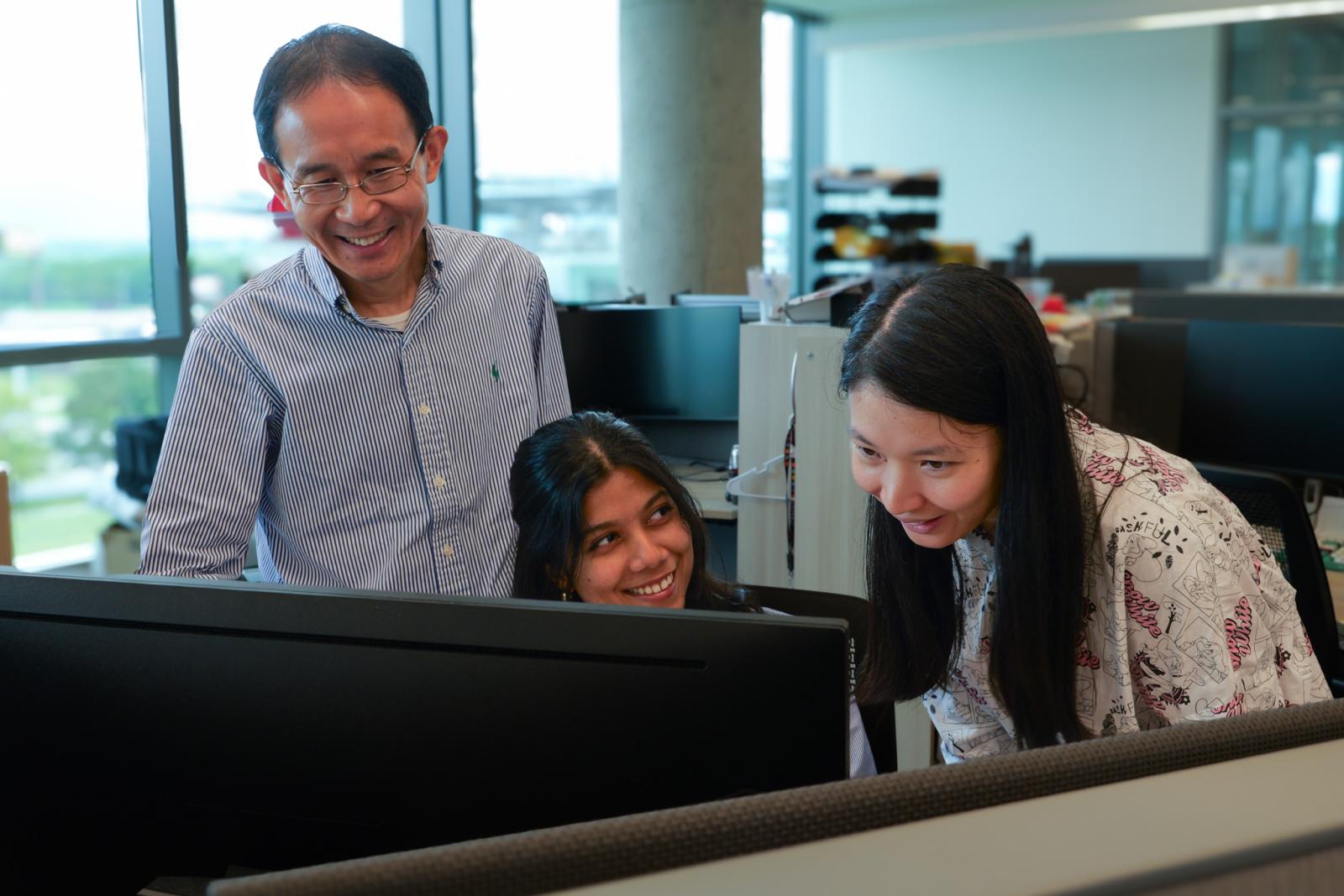
That’s what members in the lab of Xiaolin Cheng, PhD, professor of medicinal chemistry and pharmacognosy at The Ohio State University College of Pharmacy, are doing. Dr. Cheng leads a team of researchers focused on computer-aided drug discovery and development.
Computational drug discovery utilizes computer tools and mathematical models to characterize molecules. These tools help us to better understand, predict and optimize drug interactions and efficacy, offering a major efficiency boost to the early stages of drug development.
“Drug discovery is very complex,” Dr. Cheng said. “But if you have a lot of data, as our research always does, AI can really help you dig into the subtle details, disentangle those relationships and help guide the design.”
Across drug discovery labs, PhD students at the College of Pharmacy partake in AI introductory courses led by Dr. Cheng and Kimberly Professor of Pharmacy Mitch Phelps, PhD. Through these courses, students learn AI tool applications and standards for use in research settings.
"You have to think in an AI-native, agent-native way.”
Through individual lab work and collaborative “Nerd Hours,” students are encouraged to experiment with these tools, share insights and develop confidence in using them effectively.
"Our goal is not only to teach the core AI technologies for drug discovery and design to students with an AI background, but also to provide students without prior experience hands-on, practical training,” Dr. Cheng said. “By introducing them to the topic and the tools, they can apply their new knowledge to their own research.”
At its core, AI is a tool best suited to identify patterns and find correlations. This means that AI tools can look at data on molecules of interest and recognize rules and relationships for the input structures.
“AI tools offer significant improvement in the capacity and throughput of drug discovery researchers by enhancing our predictive and characterizing capabilities,” Dr. Cheng explained. “But underlying AI does not learn continuously or retain new knowledge unless it is specifically designed and updated to do so. This makes the scientific oversight, domain knowledge and AI literacy of our researchers essential.”
Despite the eye-watering speed at which AI runs, it’s not quite sophisticated enough to tackle drug discovery in the way that our human research teams do. So, Dr. Cheng and his colleagues in computational drug discovery are not only teaching the next generation of researchers how to apply AI to their workflow for greater efficiency, but to build out AI frameworks.
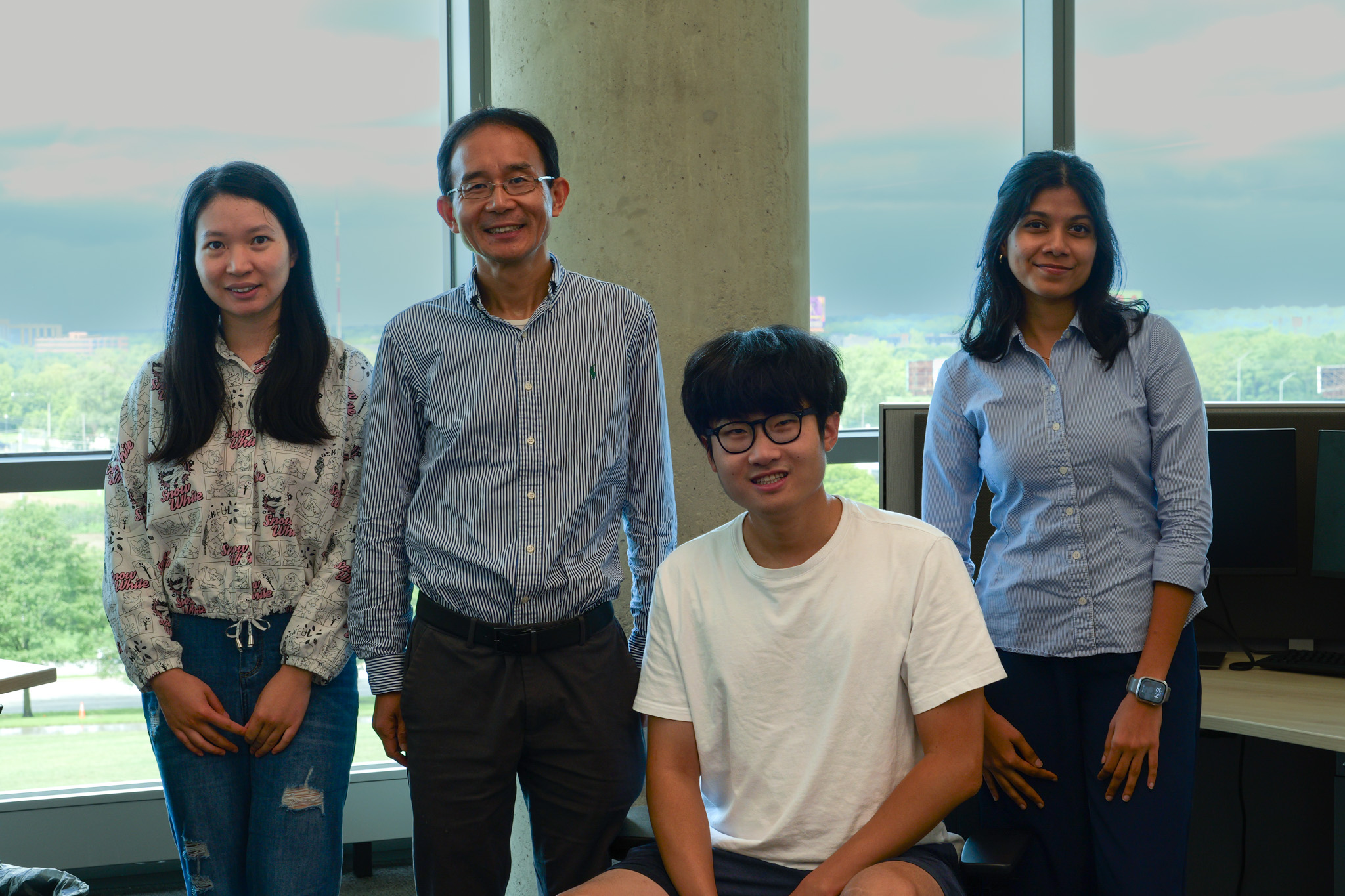
“Since we don’t train the underlying models ourselves, the real work lies in the systems we build around them,” said Sam Xing, fourth-year PhD candidate of the Cheng Lab. “That means mapping out where a given model is strong and where it falls short, and surrounding it with the context, tools and safeguards it needs to carry out a well-scoped task dependably.”
Xing and postdoctoral researcher Shen Wang, PhD ’25, are helping lead AI use in the Cheng Lab. The pair have been regularly using AI in their research projects since 2023 and as such, have become important mentors for newer members of the lab.
“Working with AI requires a different way of thinking,” Xing said. “Rather than getting stuck in the granular technical details, you need to step up a level, look at the big picture and ask the right questions grounded in a clear scientific vision. You have to think in an AI-native, agent-native way.”
Since their early days of simply using AI to assist with code completion and small programming tasks, Dr. Wang and Xing have taken to designing agents so that tools can reliably complete time-intensive tasks.
“An AI agent has two essential components: the underlying model and the harness built around it,” Dr. Wang explained. “The model determines the agent’s core reasoning capabilities, while the harness provides the context, tools, feedback loops and guardrails that allow it to complete tasks reliably.”
Recently, Dr. Wang developed the agent “Auto Research,” which partially automates the task of providing context to an AI tool. This agent addresses the problem of underlying AI’s lack of memory by sourcing literature from University Libraries, processing that material and storing the new knowledge for continuous use in the libraries’ databases.
“Agents like this scale up what we can achieve as individual researchers,” Xing said. “It feels less like working alone and more like being a single researcher empowered with a much larger capability. For drug discovery specifically, this matters because AI can process information and accumulate experience far more effectively than a human can.”
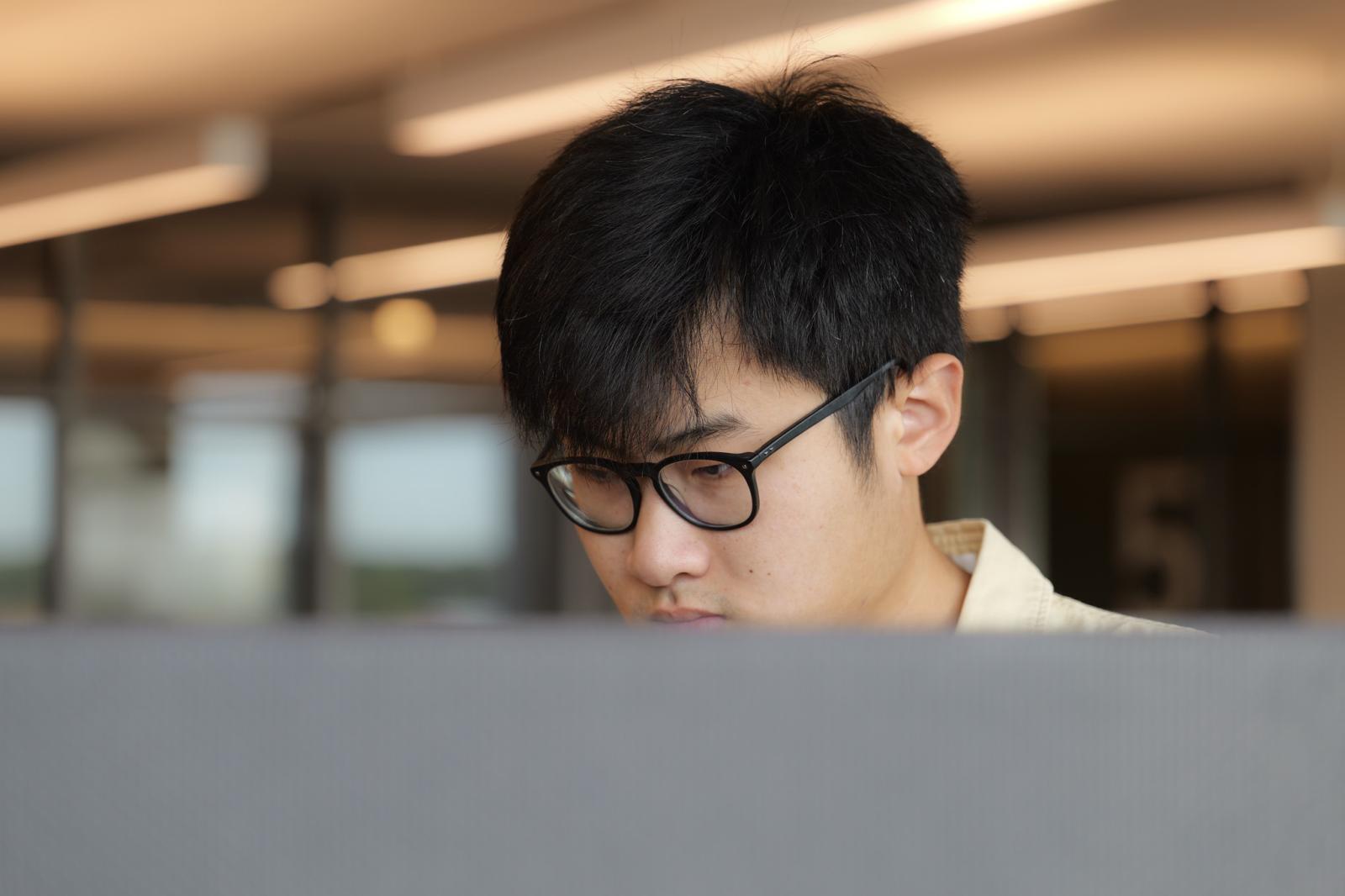
Dr. Cheng and trainee researchers like Dr. Wang and Xing are hard at work coaching the upcoming generations of computational researchers in their lab. They’ll also be supporting Buckeye BioLaunch – a new collaborative initiative at Ohio State aimed at accelerating therapeutic discovery, development and commercialization – by advancing AI research tools necessary for efficient screening of promising drug candidates.
As the role of AI continues to grow in the realm of research, the college remains focused on pairing technological power with human expertise. By teaching students to not only use, but build, evaluate and customize AI systems, drug discovery faculty are preparing the next generation of researchers to accelerate discovery.
“This is going to fundamentally change our work,” Dr. Cheng said. “But my students are really at the frontier, as they take this learning in stride and create novel agents that work for them.”