High school students tackle drug modelling at Cancer Bioinformatics Bootcamp
Bioinformatics is a cornerstone in the drug discovery research process. Since its appearance on the scene approximately 50 years ago, this discipline combining biology, mathematics, statistics and computer science has given researchers the capability to break down DNA and protein sequences to develop better treatments.
Bioinformatics is a necessity in labs throughout The Ohio State University College of Pharmacy, and experts are extending their know-how to the next generation of researchers.
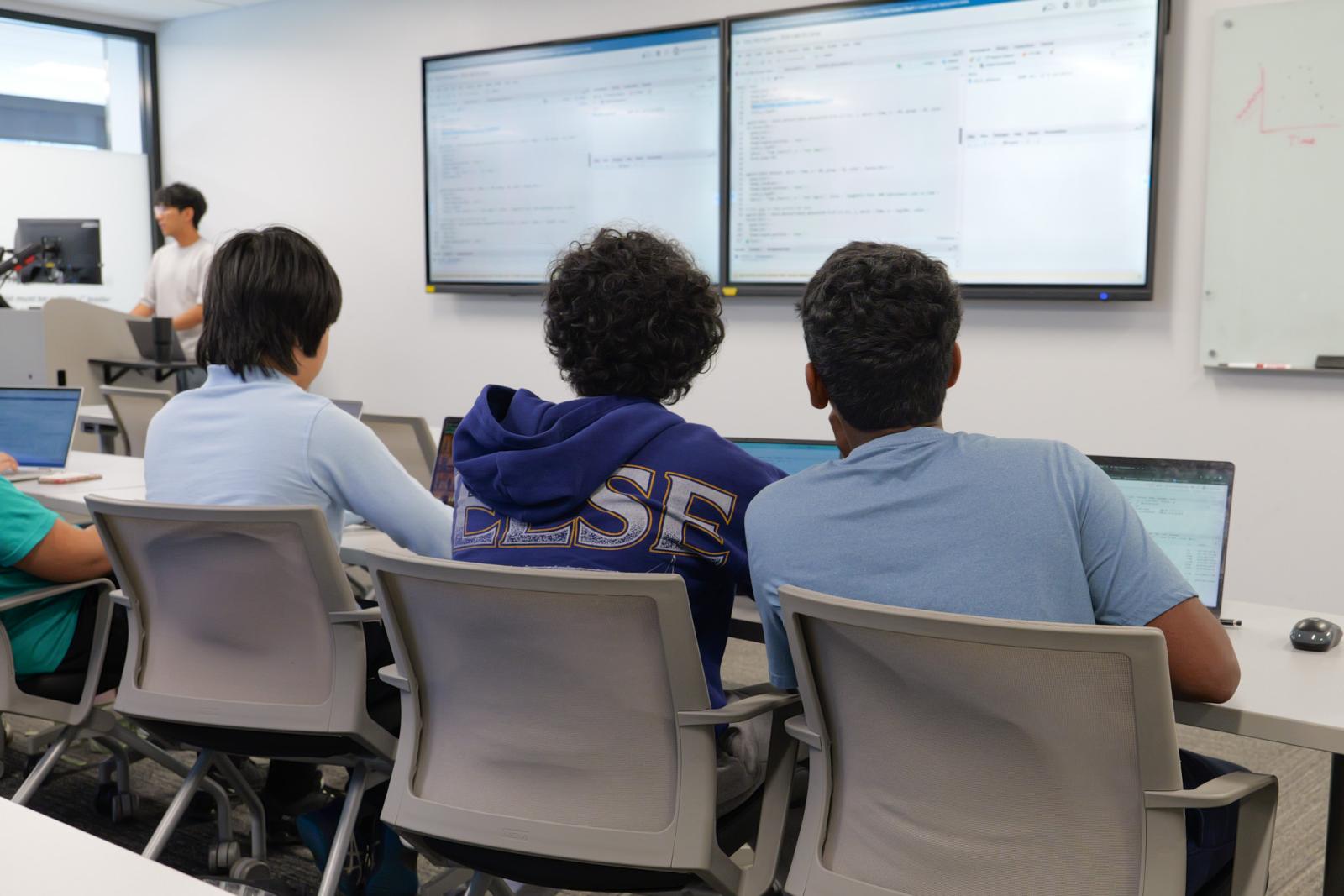
Kimberly Professor of Pharmacy Mitch Phelps, PhD, and three student researchers led a high school intensive June 23-25 as a part of the annual Cancer Bioinformatics Bootcamp (CaBi).
The full program, organized by Xiaokui Mo, PhD, associate professor at Ohio State’s Comprehensive Cancer Center – James Cancer Hospital and Solove Research Institute (OSUCCC — James), lasted a week and took 11 high school students around the Ohio State Wexner Medical Center (OSUWMC) and other health science colleges.
“Data science camps are valuable at an early age because they introduce students to a modern way of thinking about information and data before academic and career pathways are set,” Dr. Mo said. “And participation in a hands-on data science camp enables faculty to extend the impact of their expertise beyond the university and strengthen community partnerships.”
CaBi celebrated its third year of welcoming high school students into advanced research spaces, including the Phelps-Coss Lab.
“By giving high schoolers hands-on experience in data science, we are allowing them to explore a wide range of career paths and truly find their passion as they transition in higher education.”
Dr. Phelps leads pre-clinical and clinical development of small molecule anti-cancer and immuno-modulatory agents as a principal investigator (PI) of the Phelps-Coss Lab and as co-director of the Pharmacoanalytical Shared Resource (PhASR). His team’s strong background utilizing computational tools and modelling programs made them a great fit to instruct CaBi students.
“Using modeling, we can characterize a drug’s pharmacokinetics (PK)—how it’s processed in the body—and integrate available pharmacodynamic (PD) data to understand the relationship between drug exposure and response,” said Min Hai, PhD candidate in the Phelps-Coss Lab and CaBi teaching assistant (TA). “Modeling serves as a powerful tool to translate preclinical findings into clinical applications. It's an important discipline for students interested in bioinformatics.”
Hai served as a TA for this class alongside her lab mates, PhD candidate Jin Gyu Kim, PharmD ’26, and PharmD candidate Avery Bryant. Under the mentorship of Dr. Phelps, the College of Pharmacy TAs gave a crash course on building bioinformatics systems to provide dosing guidelines for theoretical trials.
After an initial introduction to PK/PD, the TAs introduced students to the R programming language and led them through a modelling exercise of a drug candidate.
“Our goal was to show students how to build PK/PD profiles,” Hai said. “Then we walked them through how the information they gathered could be used to design precision medicine.”
Stepping into this teaching role is a full circle moment for many of the TAs involved in the camp.
By helping to design the CaBi curriculum, Dr. Kim found himself stepping into the role of “expert” alongside his lab mates – a significant moment for a trainee researcher. Together, they leveraged their own journeys of learning drug modelling to design an accessible experience for the high schoolers.
“When I joined the Phelps-Coss Lab, I didn’t have extensive background in computational modeling,” Dr. Kim recalled. “I went through a lot of the same training that the high schoolers experienced in CaBi. It’s a pretty intimidating topic, but one that is so satisfying and rewarding to pick up.”
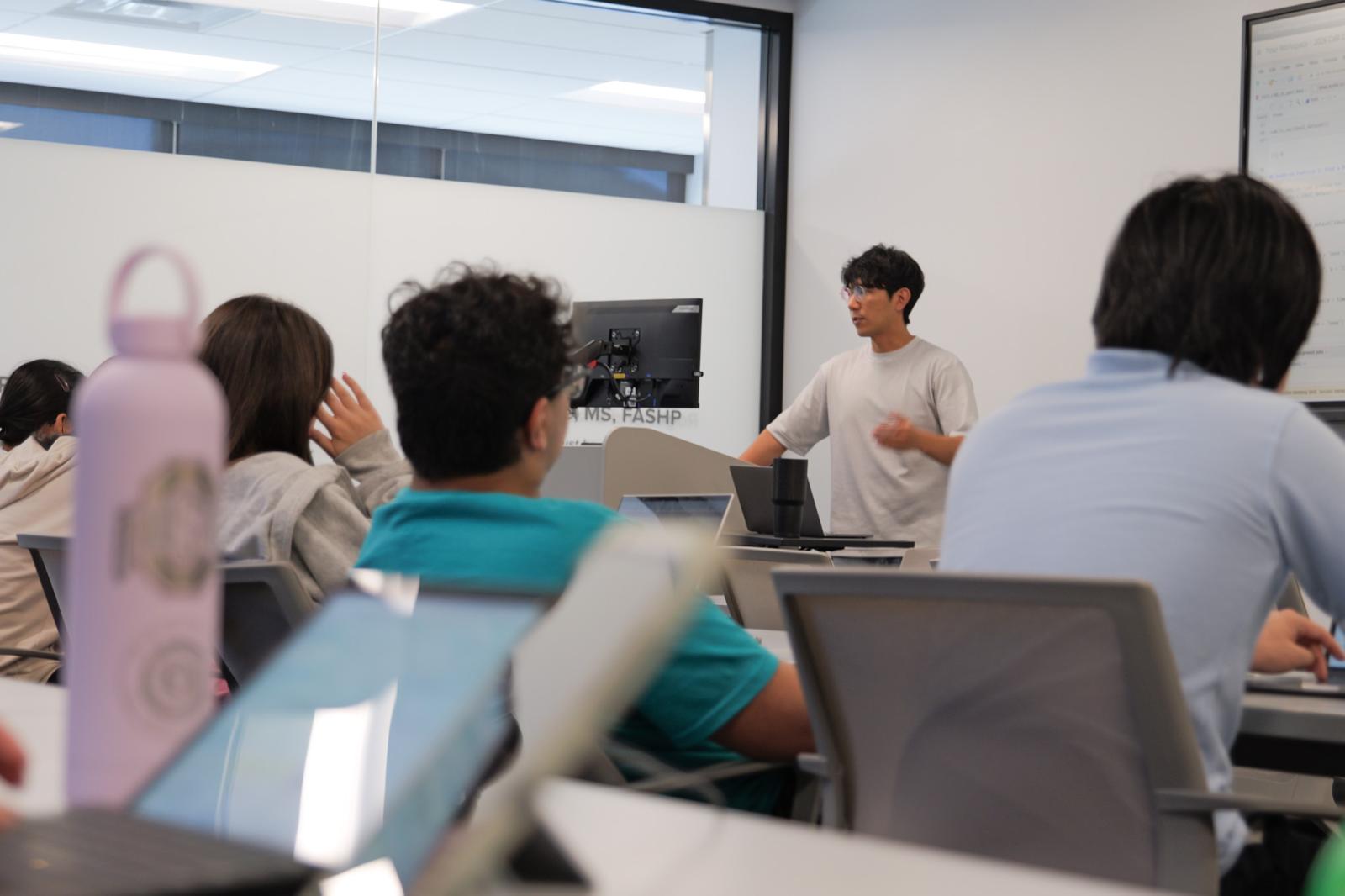
Not only was the team of TAs able to teach this high-level discipline to students, but their unique backgrounds illustrated the interdisciplinary nature of research environments.
“The world of science and medicine is so vast and constantly growing,” Bryant said. “By giving high schoolers hands-on experience in data science, we are allowing them to explore a wide range of career paths and truly find their passion as they transition in higher education.”
Outside of the College of Pharmacy, CaBi students rounded out the program with expert teams from the College of Medicine, Department of Biomedical Informatics and Center for Biostatistics.
The collaborative offering has built a strong base for high school students exploring a future in health sciences and equips them with advanced skills for a rapidly expanding field.
Dr. Mo is motivated by the program’s continuing impact.
“We look forward to inspiring students to explore data science by showing them how it can improve healthcare, advance scientific discovery and solve real-world challenges.”