How a PhD-PharmD prepares Dr. Jin Gyu Kim to keep the focus on patients
This article was published in The Script Magazine – Autumn 2026.
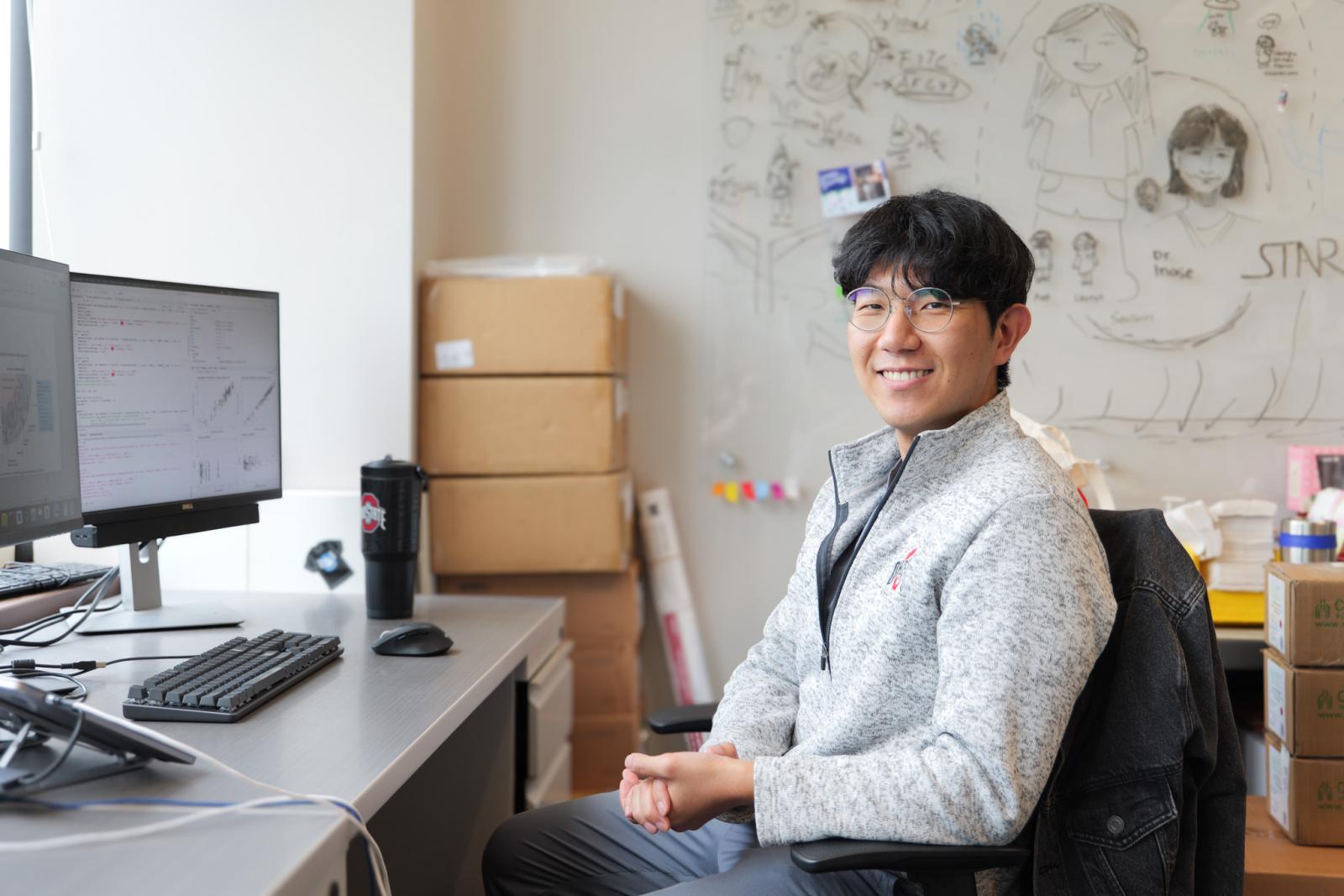
On May 9, 2026, Jin Gyu Kim, PharmD ’26, received his Doctor of Pharmacy degree. The next day, he got back to work in the research labs of the Riffe Building.
Dr. Kim is a rare dual PhD-PharmD student. After four years of hard work in labs, classrooms and clinics earning his PharmD, Dr. Kim has three years until he wraps up his time at The Ohio State University College of Pharmacy.
He began the dual-degree endeavor after his P1 year, hoping to connect his passion for clinical care to patient-centered research.
"When I began the PharmD program, the recurring questions we were asked were, ‘How do we make sure that the drug is given to the correct patient? How do we know that they’re getting the correct dosage? Why was this medication prescribed?’” he said. “I was quickly drawn toward the next level of questioning, with a desire to understand how those precise dosages and effects were determined.”
Today, he stands at the intersection of clinical practice and research, cultivating expertise to answer those critical questions.
A promising researcher is born
After recognizing his interest in research through the P1 curriculum at Ohio State, Dr. Kim secured a student researcher position in the Experimental Cancer Pharmacology Lab (ECPL) of the Division of Pharmaceutics and Pharmacology. This role was his defining first step into the world of research.
It proved to be a perfect fit, as he was integrated into the lab with the mentorship of two PharmD-PhD co-principal investigators, Sharyn Baker, PharmD, PhD, Gertrude Parker Heer Chair and professor, and Eric Eisenmann, PhD ’21, PharmD, assistant professor. The two coached Dr. Kim from early learning at the bench to complex protocol design.
“Jin Gyu’s interest in research grew from early curiosity into a strong and sustained commitment,” Dr. Eisenmann said. “While in the lab, he consistently went beyond expectations, and his intellectual engagement deepened over time.”
In the ECPL, Dr. Kim supported research on how changes in enzymes affected patient metabolism of drugs. Within the academic year, he contributed to a publication examining the disposition of venetoclax and completed an independent research project.
“We often think of research and practice as being separate, but it’s so important to find places where they connect. My choice to pursue research alongside my PharmD studies was one way that I achieved that harmony.”
As the year passed, Dr. Kim found that he enjoyed leveraging his growing clinical skills from his PharmD program in the lab—and vice versa.
“Our lab benefits greatly from having researchers with diverse backgrounds and levels of experience,” Dr. Eisenmann emphasized. “PharmD training prepares students to serve as clinical drug experts on interdisciplinary teams, and that experience translates well to team-based scientific research. Jin Gyu’s combination of intellectual curiosity, work ethic and diverse training positions him well to make meaningful contributions to science and human health.”
Whether in a lab coat or pharmacist’s white coat, Dr. Kim's dedication to solving healthcare questions improved his skills as a scientist, and his interest in pursuing a research pathway continued to grow. Keeping the momentum going, he secured an internship with Boehringer Ingelheim as his time with the ECPL came to an end.
“Getting hands-on experience in the ECPL and industry settings helped me define my place as a healthcare scientist,” Dr. Kim said. “I understood that I wanted to be a translational researcher with a strong bridge between clinical settings and the lab. That career would allow me to address my patients’ needs at a high level while supporting other clinical pharmacists by developing evidence-based treatments.”
Taking a year-long hiatus from his PharmD program, Dr. Kim officially joined the PhD program at the College of Pharmacy in the lab of Kimberly Professor of Pharmacy Mitch Phelps, PhD.
“We often think of research and practice as being separate, but it’s so important to find places where they connect,” Dr. Kim emphasized. “My choice to pursue research alongside my PharmD studies was one way that I achieved that harmony.”
Impact across the spectrum
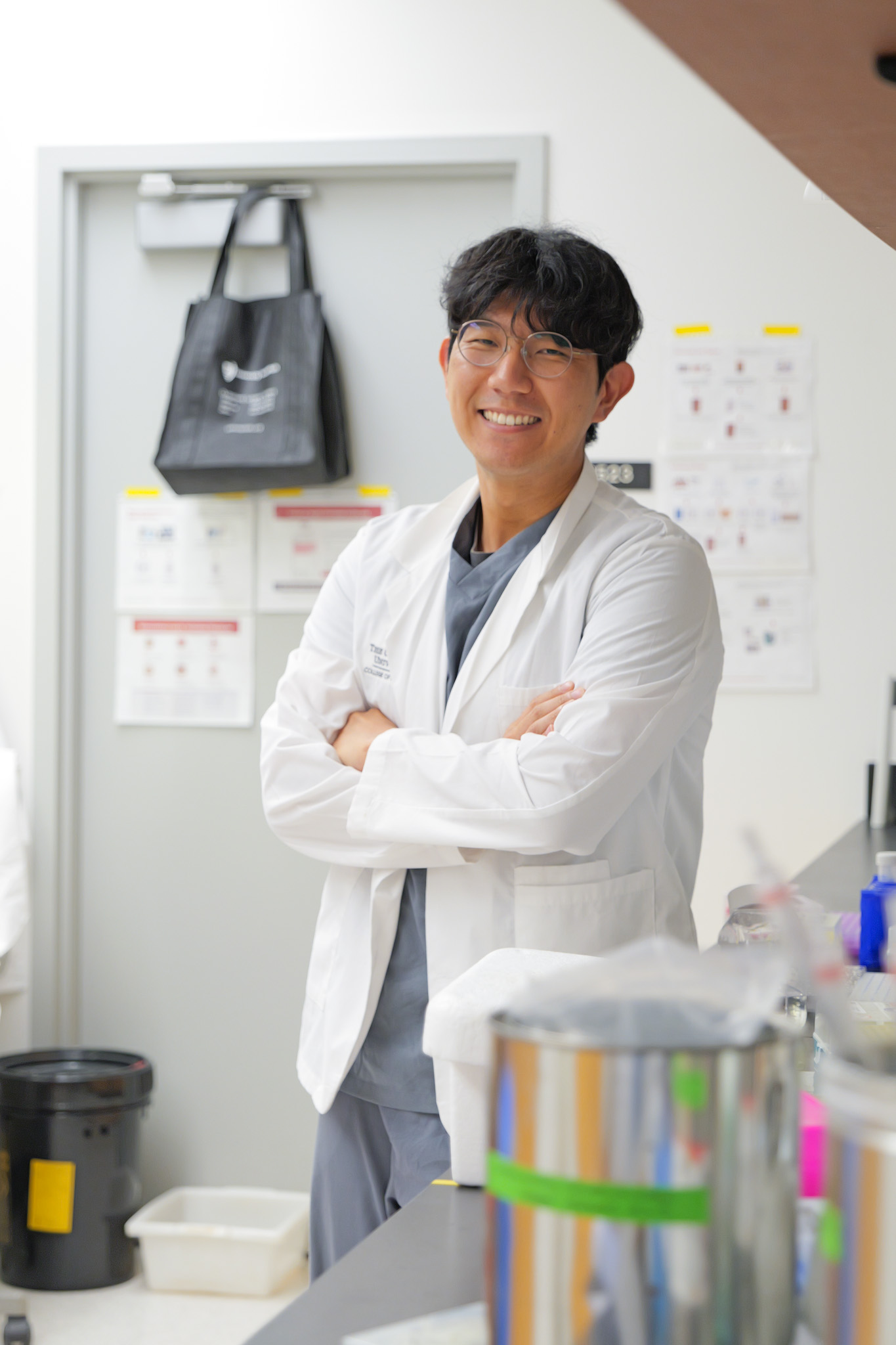 Dr. Kim split his time in the Phelps-Coss Lab between PharmD rotations and building his pharmacokinetics/pharmacodynamics expertise.
“Computational drug design has been a longtime interest of mine, so it was very exciting to build out my skillset with the guidance of Dr. Phelps,” he said. “Despite the additional workload that I took on by combining my PharmD-PhD track, it was just so satisfying to see my learning in both programs come together.”
Doubling down on his time in lab was made possible in part by Dr. Kim receiving the Dr. Julie Johnson Clinical and Translational Research Award.
“Ultimately, we need to understand the relevance of our research questions,” Dr. Phelps said. “Having trainees like Jin Gyu with PharmD expertise and clinical experience ensures that our research accounts for potential barriers and logistical constraints within the clinical setting. He not only supports our lab through computational drug analysis, but his perspective guides our thinking and better frames research efforts at the college.”
On top of two degrees worth of classwork and study, Dr. Kim has already seen major success as a contributor to a major clinical study at the Ohio State Wexner Medical Center (OSUWMC).
Since 2024, Dr. Kim has supported Assistant Clinical Professor Victoria Williams, PharmD ’19, with her project, “Maximizing Safety and Therapeutic efficacy of Antibiotics in Critically Ill Adults with Renal Failure Receiving Renal Replacement Therapy.”
This project aims to determine optimal dosing for cefepime, a commonly used antibiotic in critically ill patients undergoing prolonged intermittent renal replacement therapy (PIRRT).
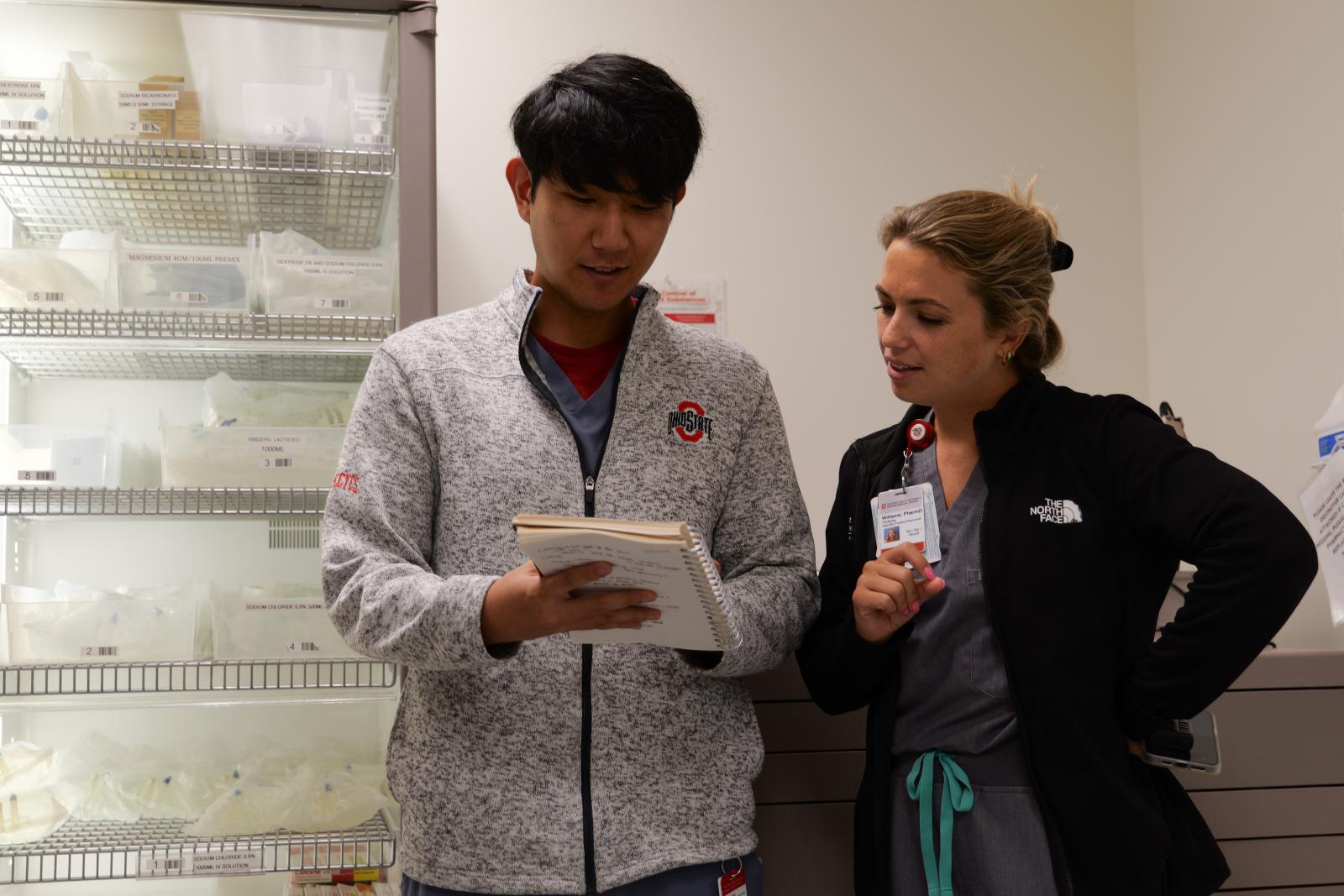
Dr. Kim was involved in the design of the project, and thanks to a serendipitous pairing with Dr. Williams for his P3 IPPE rotation, he had face-to-face interactions with the patient population enrolling in the study.
“The study was created to address a clinical question about my patients at the med center, and with his combination of clinical experience and strong pharmacokinetic background, Jin was a clear fit,” Dr. Williams said. “He jumped in and directly developed the pharmacokinetic analysis of this project and drafted the protocol and IRB approval.”
After developing both lab expertise and clinical know-how, the study was an important space for Dr. Kim to achieve his ultimate goal—bridging clinical practice and science to move findings from the bench to patient care.
Currently, Dr. Kim is wrapping up his involvement with Dr. Williams’ project, and his focus turns to the remainder of his dissertation research in the Phelps-Coss Lab, which he will approach with the new qualification as a Doctor of Pharmacy.
"As I complete the PharmD portion of my academic career, I’m very proud to have pushed outside of my comfort zone and pursued research,” Dr. Kim said. “I believe that my work to combine clinical and computational knowledge offers better treatment options and advances the future of precision dosing.”