Hello? This is your future pharmacist speaking: Kroger Health collaboration introduces innovative experiential rotation for P2 class
This article was published in The Script Magazine – Spring 2026.
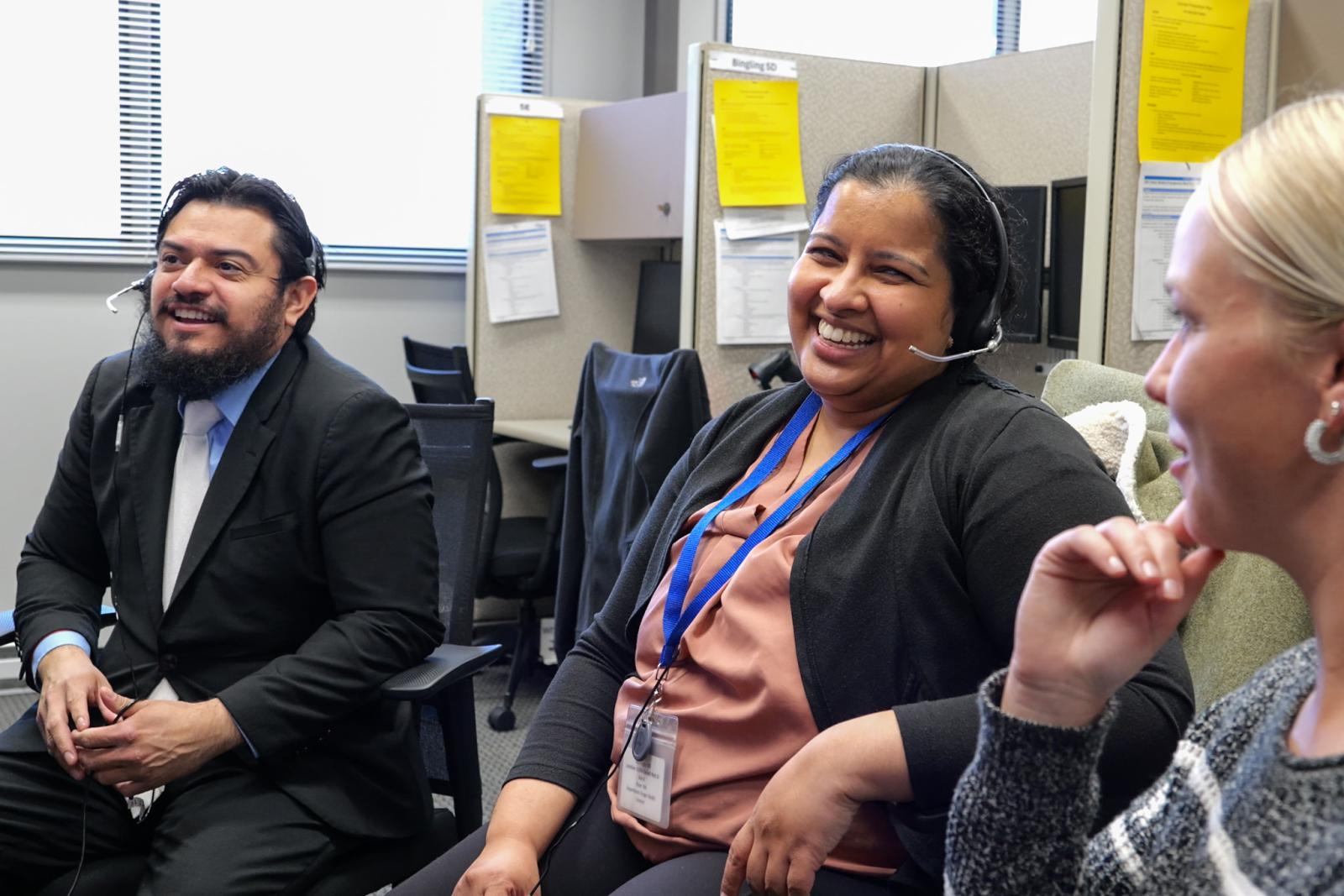
From a call center 10 minutes from campus, second-year Doctor of Pharmacy (PharmD) students from The Ohio State University College of Pharmacy are playing a key role in patients’ health outcomes across the country.
This is thanks to a collaboration with Kroger Health and their centralized services department, Kroger Health Connect (KHC).
During the 2025-2026 academic year, the College of Pharmacy and KHC joined forces to offer a new experiential rotation to PharmD students completing their Introductory Pharmacy Practice Experiences (IPPE).
“Kroger Health has a very learning-forward culture, so it’s been a wonderful space to give our students experience,” said Kristine Cline, PharmD ’17, MS ’19, assistant professor of practice and shared faculty at the college and KHC. “Students are working with preceptors who give them a safe space to practice counseling and motivational interviewing. You can really see the excitement from the preceptors as well.”
As part of the college’s Inquire, Innovate, Involve (I3) curriculum, PharmD students spend their first three years rotating through IPPE sites. These placements give them early hands-on pharmacy experience, build essential interpersonal skills for patient care in varied settings and help them put classroom learning into practice.
KHC has a unique setup compared to other IPPE rotations. Pharmacists operate a telephonic medication counseling program from two centralized locations, one in Columbus and the other in Cincinnati. From the centers, pharmacy teams contact patients of The Kroger Family of Pharmacies and provide patient-centered services to optimize medication adherence and health outcomes.
The collaboration with Ohio State is housed at the Columbus location and serves a patient population from more than 1,500 Kroger Family of Pharmacies.
“Our goal is to bridge the gap between patients and medication expertise,” said Louise Faiella, PharmD ’15, KHC pharmacist and IPPE preceptor. “We’re here to provide that additional support and alleviate some of the call burden from in-store teams so they can focus on patients who are there.”
Calls with patients focus on medication reviews, targeted intervention and the common disease states of high blood pressure, high cholesterol and diabetes. Depending on where the patient leads the conversation, pharmacists can offer important health care expertise on a wide range of topics.
“Initiating a conversation about a patient’s medication regimen can improve medication adherence and offer them support on topics they might not be comfortable discussing in store,” said Ashley Toaz, PharmD ’14, MBA ’24, BSPS ’10, medication therapy management supervisor at KHC. “From the comfort of their own homes, patients can really open up with us, and we can address their concerns and plan of care together.”
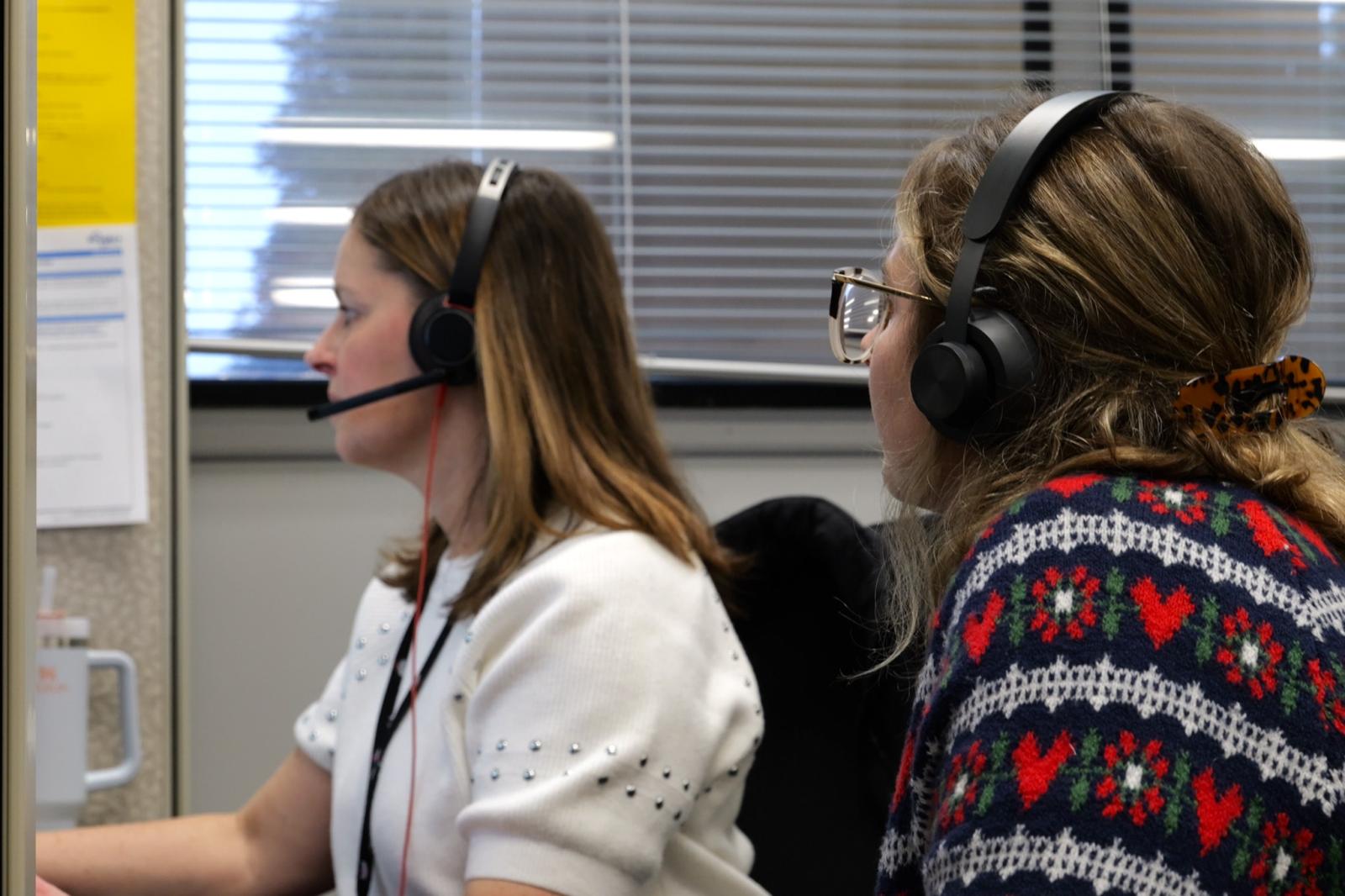
KHC is one of two experiential partners to take on all P2 students. Each student spends a total of 24 hours with the staff of KHC. After first learning from KHC precepting pharmacists and faculty preceptors—Dr. Cline and Vinita Pai, PharmD, MS, BCPPS, associate clinical professor—students begin to make calls.
“What makes this model impactful is the immediate application of what students are learning in the classroom to real patient interactions,” said Jim Kirby, BS Pharm ’98, PharmD, BCPS, FAPhA, chief commercial officer of Kroger Health. “They can see firsthand how clinical knowledge translates into improving medication use, adherence and health outcomes. Collaborations like this show how academic institutions and health care organizations can work together to strengthen the profession while preparing the next generation of pharmacists.”
Just like their preceptors, students engage patients in conversations about their current medications and related questions and concerns. Over the course of their call, they remain supervised by their preceptor and have a peer partner for support.
“Speaking with patients from their own home allows them to discuss their medications at their own pace,” said Darshan Patel, P2 class president. “This is the most involved I’ve been in personalized counseling, while still having the help of a preceptor to rely on.”
Patel completed his rotation with KHC in early March and described a sense of accomplishment at taking this major step in his professional journey.
“I feel really proud of how comfortable I’ve gotten speaking with patients on the phone,” he said. “It helped me to apply what I’ve learned in class smoothly and know that I’m really helping someone.”
“Access to preceptors who are enthusiastic to share their expertise is an amazing way to enrich our students’ professional growth.”
Leading these conversations relies on the pharmacy teams’ expertise on medications and motivational interviewing skills. This makes KHC a great place for students to strengthen their communication skills, further establishing themselves as student-pharmacists.
“This rotation is such a great opportunity to develop motivational interviewing skills,” Dr. Pai emphasized. “As students operate in teams with their classmates and a preceptor, they apply their technical and interpersonal knowledge. Preceptors provide regular coaching and encourage students to share feedback about their learning experience, allowing us to continually refine and optimize the rotation while supporting student growth.”
Preceptors and collaborators are encouraged not only by the positive impact on their students but also by the improvements seen in patient outcomes. Data from student-led phone calls showed a 90% success rate in patient interventions.
“These outcomes show us that our students are quickly becoming stronger practitioners thanks to this rotation,” Dr. Cline said. “Access to preceptors who are enthusiastic to share their expertise is an amazing way to enrich our students’ professional growth.”
Given the impact the program has had on student preparedness during its first academic year, the collaboration has expanded to include P4 students' Advanced Pharmacy Practice Experience (APPE) rotations at the Columbus KHC site next year.