Showing PharmD candidates what industry has to offer

This article was published in The Script Magazine – Autumn 2026.
Medications that reach patients after FDA approval are the product of extensive research, clinical development trials and collaboration across disciplines. Most of these therapies are ushered through development by those in the pharmaceutical industry. Bringing a medication to market is costly and complex because drug development must show that its benefits outweigh its risks, requiring substantial effort and a highly skilled workforce.
Despite its critical role in bringing therapies to market, the pharmaceutical industry is often misunderstood by students and healthcare professionals alike. As a sprawling and complex field, it can be difficult for pharmacy students to cut through the noise and understand what industry truly has to offer.
Luckily, adjunct faculty and alumna Kim Cremers, PharmD, BS Pharm ’92, is here to provide student-pharmacists with an insightful look at the career options available and demystify the industry.
With more than 25 years of experience in the industry, Dr. Cremers has extensive expertise on its impact on patients and the important role pharmacists have in advancing treatments.
“In my interactions with pharmacy professionals outside of the world of industry, I am routinely faced by the reality that industry is not well understood,” Dr. Cremers said. “Plenty of people cast judgement on the industry and discount the significance of industry pharmacists’ work, their commitment to patients and ultimately, disregard the role of these scientists on patient care.”
Recognizing the disconnect between the value of industry careers and the perception of those outside the field, she identified a need for earlier education on what industry is. Thus, the “Introduction to the Pharmaceutical Industry” course was born.
Building awareness of industry careers
A PharmD student heading into industry can find themselves with an overwhelming number of potential career pathways. “Introduction to the Pharmaceutical Industry” turns down the torrent of information about potential roles by inviting students to engage, reflect and practice.
“Due to the complexity of the research and development process required to bring a drug to market, pharmacists have the skillset to take on roles across the continuum,” Dr. Cremers said. “By encouraging students to learn about some of these roles and then contextualize them by practicing a few of the skills through practical assignments, we can make the career pathway much more real and approachable.”
The course launched in spring 2025, inviting PharmD candidates to explore the vast array of career options, confront any misconceptions and hone their critical thinking skills. Over the course of the semester, students are visited by 20+ industry professionals.
“These visiting speakers are so important not only to give our students an overview of their specific function, but also because networking is key in the world of industry,” Dr. Cremers said. “The majority of these guests have come through a program at the college, which gives our students an easy point to connect and envision themselves as a successful professional.”
Interest in the pharmaceutical industry is palpable at the college. The student organization Industry Pharmacists Organization (IPhO) is packed to the brim with enthusiastic industry hopefuls.
“Many students don’t realize how many opportunities exist for pharmacists that are not community or hospital pharmacy,” said Maya Simpson, IPhO president and P3. “Students cannot pursue opportunities they do not know exist, which is why introducing industry careers early on is so valuable.”
With encyclopedic knowledge of patient education, disease states, drug mechanisms, and much more, pharmacists offer great value to the pharmaceutical industry.
Ohio State’s IPhO chapter sees high student engagement throughout the school year and is notable among the national student-pharmacist organization. In spring 2026, Ohio State’s chapter placed fourth in the annual Value of Industry Pharmacists (VIP) Case Competition, an event that invites students to showcase their drug development, commercialization and marketing knowledge by making a plan to bring a fictional product to market.
“I'm so proud to see how our students have mastered the process of pharmaceutical development,” Dr. Cremers said proudly. “Their dedication in class and through IPhO has shown their willingness to step outside of their comfort zone and expand their skillset to a less traditional path.”
IPhO members utilized Dr. Cremers as an important support for club events and the case competition, and as a springboard for industry internships, rotations and postgraduate plans.
What began as an effort to demystify industry has evolved into an important space for student success. Through “Introduction to Industry,” IPhO and meaningful professional connections, PharmD students are gaining the knowledge and confidence to explore a wide range of career possibilities.
Turning interest into experience
“Prior to pharmacy school, I hadn’t heard many nuanced conversations about industry or really developed my understanding of the individual roles in the field,” said Mari Lynn, P4 and former “Introduction to Industry” student. “By getting involved with IPhO and engaging in classes, I suddenly saw how industry blends scientific innovation and patient care while still operating as a business.”
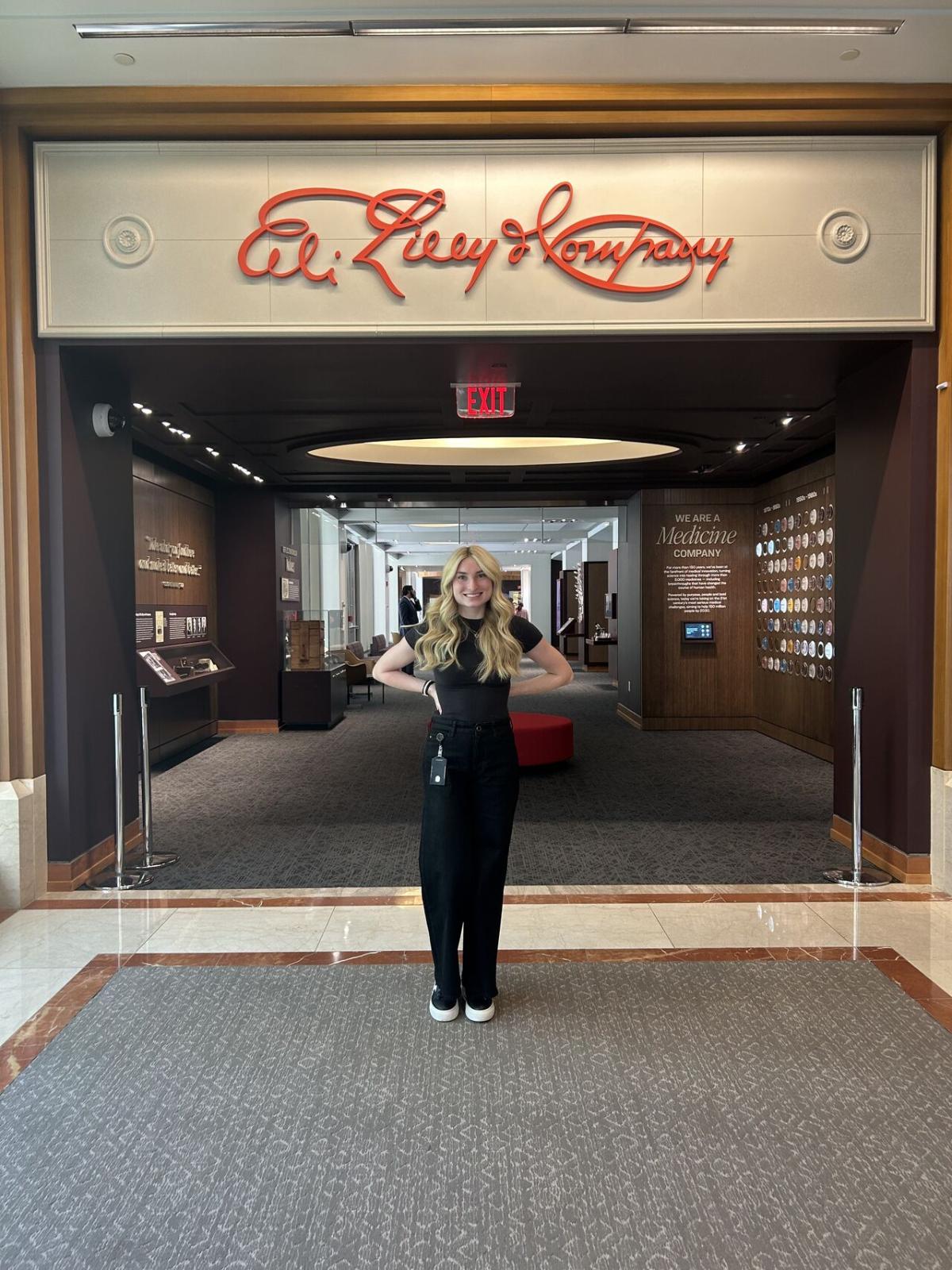
Lynn tested her industry intrigue by securing a medical affairs internship with Eli Lilly in summer 2025 and returned for summer 2026 on the patient engagement team. On her most recent stint, Lynn served as a patient contact to ensure safe and positive experiences throughout the clinical trials process.
Positions like this showcase how the personal touch of a PharmD can be essential to the drug development process. Those interactions hit home for Lynn.
“What’s so cool about industry is that you’re not just helping one patient, you’re helping millions,” she said. “During both cycles of my internships here, I’ve gotten to really understand how the individuals in industry make global care stronger. That helps me to envision where I’d like to end up and how I’ll someday make an impact.”
A central element of Eli Lilly’s internship programs requires participants to meet with a new, established professional of the company each week of their program. Through this structure, new professionals gain exposure to more than just the role that they’ve accepted for the season.
“We got to practice drug development skills in class, but another really important component was just practicing the professionalism needed in industry,” Lynn said. “Dr. Cremers gave me a lot of crucial feedback as I reapplied to Eli Lilly for another internship and even showed up to encourage IPhO members pitch ourselves and get comfortable speaking as medication experts.”
To top off the internship and rotation experience offered to students through industry coursework at the college, Dr. Cremers is there to support students transitioning into the post-graduate world.
Industry fellowships are competitive training programs to further the experience of PharmD graduates. They typically last one to two years, providing a significant entryway into the field and important training ground.
Current P4 Dhairy Patel is preparing for fellowship application season, and while nervous for the process, he is set up for success thanks to his experiences and guidance from the “Introduction to Industry” course.
“When you look at the fellowships available, they are extremely specialized,” Patel said of the application process. “It makes it much easier to pursue fellowships when you've found an industry function that resonates with you early on.”
Patel rotated with the clinical development team at Eli Lilly for the first month of his Advanced Pharmacy Practice Experience (APPE) in May 2026. Through this role, he shadowed the team that keeps development projects moving along.
“It was so cool to be a part of a team conducting cutting-edge drug development,” Patel said. “Throughout the rotation, I could connect with fellows and established professionals to dig into what my post-graduate plans might look like. I get more excited and curious about the field the more people that I talk to.”
For his first summer of APPE rotations, Patel supported a clinical development team at Eli Lilly in Indianapolis. He said he would like to dive deeper into an expert role through a research fellowship.
“Residencies are a common post-graduate pathway, and that’s good in a lot of ways. It provides new professional a transitional phase to become clinical experts,” Dr. Cremers said. “It’s important that student-pharmacists are aware that fellowships are an alternative pathway to hone their skills and prepare a career in this space.”
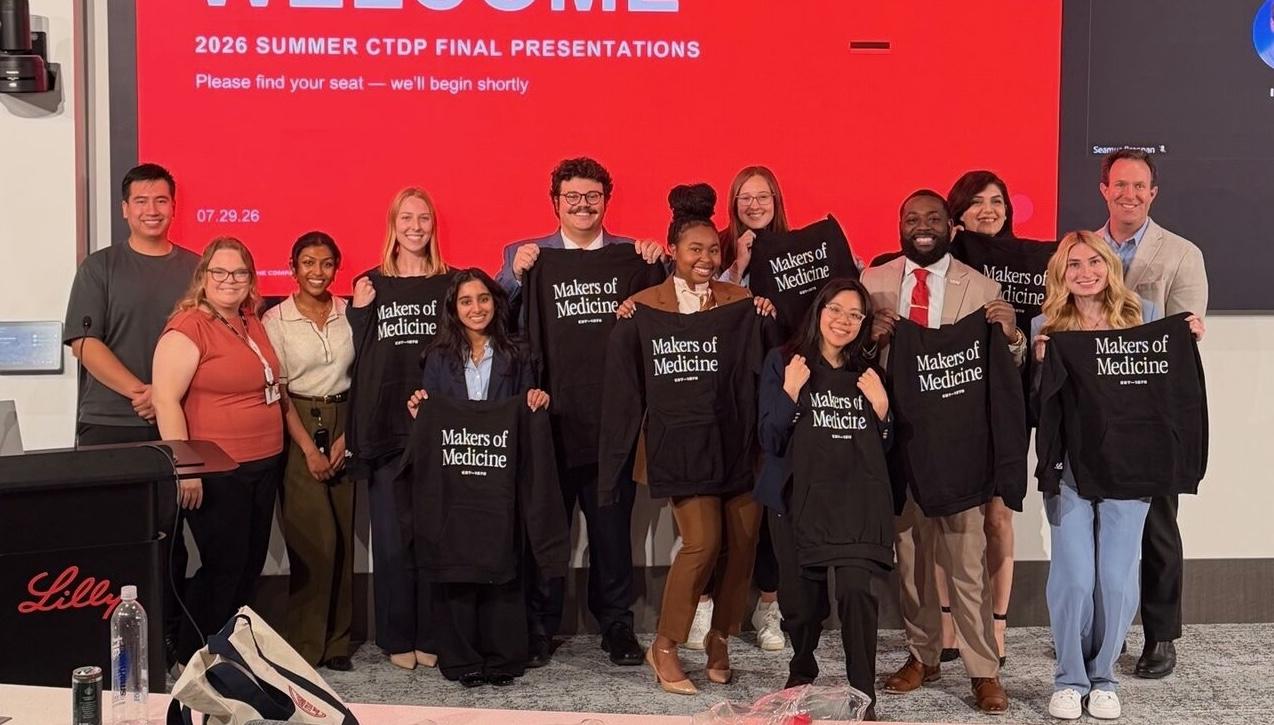
Industry represents a world of possibilities for PharmD candidates. Through the continuum of drug development to marketing and beyond, pharmacists bring valuable expertise to every step in the process of bringing medications to patients. By introducing students to these pathways early, the College of Pharmacy ensures that they understand the variety of options available with their degree.
“At the end of this class, you’re going to be a better pharmacist because you’ll understand where drugs come from, what it takes to bring a drug to market, the research, the regulations – all of the work that goes into it,” Dr. Cremers said. “That deep understanding of the development process makes stronger pharmacists and healthcare providers.”