PharmD paths: Community pharmacy with Dr. Rebecca Lahrman
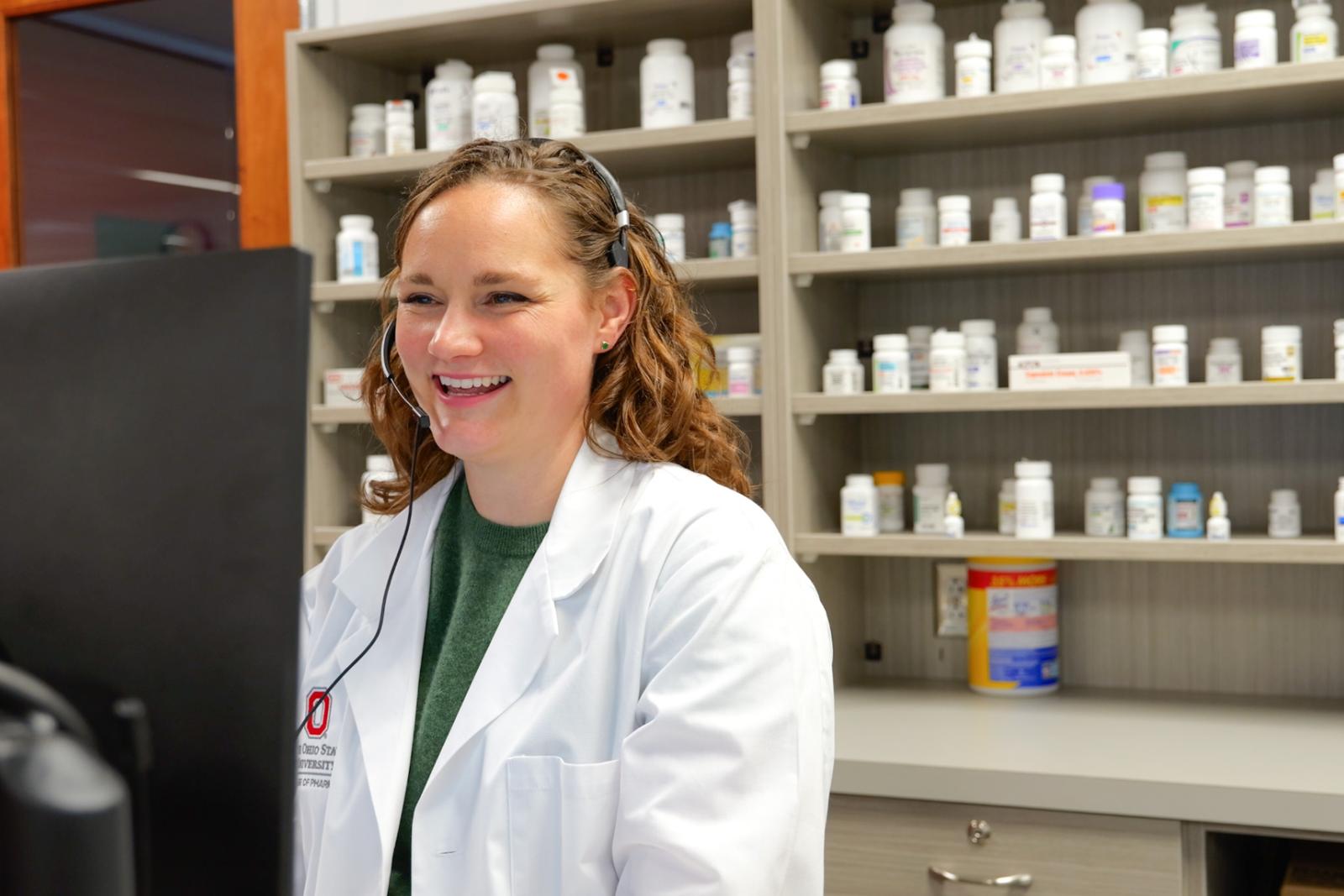
Community pharmacists are the accessible healthcare professional. Often overlooked for all that they do, community pharmacists are a cornerstone of the continuum of care. In addition to filling patients’ prescriptions, they provide medication counseling, administer vaccinations, develop community health initiatives and much more.
As the role of pharmacist expands nationally, community pharmacists can do more than ever in support of their patients with chronic health conditions, such as diabetes and hypertension. With appropriate training, they can test patients’ health numbers and provide guidance on the next steps in treatment.
You can find community pharmacists in familiar chain locations like CVS, Walmart and Walgreens as well as independent pharmacies, mail-order pharmacies, telehealth settings and more. It’s a position that professionals can truly make their own.
Rebecca Lahrman, PharmD, community pharmacist and assistant professor of practice at The Ohio State University College of Pharmacy, is always seeking to make community pharmacy better for her team, students and patients. She supports communities in southeast Ohio, working as a pharmacist and preceptor.
Dr. Lahrman explains the essential, yet often underappreciated discipline of community pharmacy, and shares how her love for community and creativity keeps her invested.
What positions exist within community pharmacy settings?
A lot of people immediately think of traditional retail pharmacy when they hear “community pharmacy.” Larger chain pharmacies employ a lot of policies and procedures that outline expectations for their pharmacists and also create a very structured day. I really enjoyed having a clear idea of what my day would look like and strictly designated hours when I worked with these chains.
However, community pharmacists reach much farther than just those chains. You’ll also find a lot of us in independent pharmacies. Independent pharmacies allow you to exercise your creativity to design patient care services. When I worked with Shriver’s Pharmacy in Athens, Ohio, I built a travel health service for patients to get yellow fever vaccines, typhoid vaccines, and learn more about what medications they would need while travelling abroad.
Finally, there are some less visible locations, like mail-order or telehealth pharmacies.
Something that’s nice about community pharmacy is that it’s easy to transition between roles, because a lot of the core duties remain the same. You just get to test different problem-solving skills based on the setting. For instance, a mail-order pharmacist will have to consider the conditions of where their prescriptions will be delivered, whereas a chain community pharmacist will have to plan for an influx of immunizations during flu season.
What does a typical day look like?
In a traditional community pharmacy like mine, you spend your day bouncing around. I’m typically stationed at my computer, where I can review incoming prescriptions, check that those medications are appropriate for the patient, note any potential interactions, and contact prescribers or caregivers when needed. I also double-check the prescriptions filled by our pharmacy technicians for accuracy and counsel patients when they call or come to pick up their medications.
I’ll sometimes be pulled away from that work to test patients’ blood pressure, teach them how to use their glucometer or give a vaccine. Depending on your role, you may also have time to conduct research or develop programming for your patient community. I love that from one moment to the next, my work is always changing. I might go from reviewing procedures with my technician to delivering education about a patient’s medical equipment.
What’s unique about community pharmacy?
We know that pharmacists, overall, are the most accessible healthcare providers. That rings especially true for community pharmacists. Patients see their community pharmacist more than any other member of their healthcare team, so you are by their side providing support and advocating for them long-term.
Besides building those meaningful connections with the community you serve, a community pharmacist fields a lot of healthcare inquiries from folks who aren’t our patients. The number of times I’ve gotten calls from patients who are not mine but need information for an urgent medication-related event is quite high. Being there for people through every chapter of their life is really important to me, and it’s lovely to look at how connected I am with the entire community.
What training did you go through to get to this position?
I think what’s really special about the Doctor of Pharmacy degree is that it prepares you wonderfully for the field without any necessary additional training. Most community pharmacists enter the profession right after they finish their PharmD.
However, for folks interested in more specific avenues, such as owning their own pharmacy or conducting service implementation, there are plenty of community pharmacy-based residencies that offer more specialized training. Post-graduate residencies are always an option.
What might make someone a good fit for community pharmacy?
It’s helpful to be flexible, since the job keeps you on your toes. Being a strong communicator is also important, because it allows you to connect with people of any background to educate and advocate.
Community pharmacists come in so many different personality styles, what it really boils down to is caring for the patients you serve. One of my tips that I try to instill in my experiential students is to take the time to learn from your patients. With such diverse patient populations, community pharmacists have so much that they can and should learn from their patients’ lived experiences.
How can someone test if community pharmacy is a good fit?
A lot of our undergraduate students work as pharmacy technicians before even beginning their PharmD program. Working as a pharmacy tech is a critical step in becoming a pharmacist because they develop a great understanding of insurance components, navigating the pharmacy system and behind-the-scenes of a functional pharmacy.
Besides working as a pharmacy technician, there are internships and shadowing opportunities at a lot of independent pharmacies. Chain pharmacies can be a bit harder to get internships with, but they are out there.
Another wonderful thing about community pharmacy is that hands-on experience is very accessible to anyone wanting to learn more.
How do you see your impact on patients?
I remember my first year working in an independent pharmacy. Patients brought in so much food as a thank you for the holidays. Working in an Appalachian community, sharing food is a special thing, and I was so touched to see that physical representation of gratitude and connection.
We also get to see the health of our patients shift since we support them for longer periods of time. This is especially visible with patients who begin treatment for chronic conditions while in our care. Since you touch the lives of patients living with all kinds of diagnoses and backgrounds, your impact takes so many different shapes.
Personally, I also engage with pharmacy advocacy organizations, which allows me to affect change on a larger scale. I support legislation that allows pharmacists to have the greatest impact on patients’ wellness and makes healthcare more accessible and affordable.