College preceptors and faculty expand DEA licensure across Ohio State clinical sites

This article was published in The Script Magazine – Autumn 2026.
Since the passage of the Federal Controlled Substances Act in 1970, medications have been categorized based on their potential for abuse. As a result, providers are required to hold certification from the Drug Enforcement Administration (DEA) to prescribe schedule II—or “controlled”—substances.
While the additional regulation of controlled substances aims to ensure careful use of these medications, it can lead to longer wait times for patients and complicate the delicate work of finding correct medication or dosage for an individual.
For decades, that prescribing capability was limited to physicians on the care team despite pharmacists’ role as the “medication experts.” But in 2021, Ohio passed a landmark legislation allowing pharmacists to register with the DEA as certified prescribers of schedule II substances.
With the passage of Ohio Administrative Code 4729:1-6-02, pharmacists at The Ohio State University Wexner Medical Center (OSUWMC) began pursuing licensure on care teams that could benefit from additional prescribing capabilities.
In 2024, the OSUWMC palliative care team became the first to acquire pharmacist DEA licensure in the Ohio State medical system. This new accreditation was an important step for the care team to appropriately manage patients’ pain and symptoms as they underwent oncology treatments.
Now, that capability is spreading across Ohio State’s clinical sites.
“The palliative care team truly carved the path for us to pursue our DEA registration,” said Kelsey Schmuhl, PharmD '17, BCACP, BS '12, clinical pharmacist at OSUWMC and assistant clinical professor and director of harm reduction and prevention education at the College of Pharmacy.
Dr. Schmuhl is one of the newest DEA-certified pharmacists in the health system, alongside Sarah Leupold, PharmD ’22, clinical pharmacist and IPCaL instructor, and Suzanne Higginbotham, PharmD, clinical pharmacist and APPE preceptor.
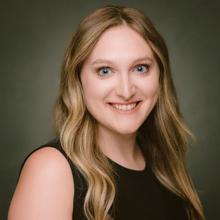
“Our clinical team is breaking down major barriers that exist for this critical checkpoint. As the medication experts, we can assess patients, make appropriate adjustments and help them stay on tack toward their health goals.”
Drs. Leupold and Higginbotham are members of the GIM New Albany location’s Weight and Wellness Clinic, with Dr. Higginbotham also providing care to patients with ADHD diagnoses. Dr. Schmuhl supports patients in treatment for substance use disorders (SUDs).
Their work demonstrates how expanding pharmacists’ prescribing authority can improve access to care across a variety of disciplines, ultimately leading to better patient outcomes.
“These medications have heightened regulation due to safety concerns, so this new responsibility isn’t something we take lightly,” Dr. Higginbotham emphasized. “Our goal isn’t simply to move faster, but rather to connect patients to the help they need in a more effective manner, which will ultimately help their outcomes.”
While their specialties differ, each team member can better address the needs of their patients thanks to their new prescribing capability.
“Within the Weight and Wellness Clinic, two major medications for our patient population—phentermine and Qsymia—are controlled substances,” Dr. Higginbotham explained. “The inability to directly adjust these medications for our patients created a kink in our chain of treatment and meant that our patients had to take an extra step in securing the care they needed.”
The pharmacists worked with their interprofessional teams to create an addendum to their collaborative practice agreements (CPAs), establishing a new referral pathway for care teams to manage patients’ controlled substances.
Patients who are prescribed controlled substances, like the prevalent phentermine and Qsymia of the Weight and Wellness Clinic, are required to have a check-in every three months. But with the combined workload of care teams and any obstacles the patient may have in getting back to the clinic, that goal can be hard to achieve.
“Our clinical team is breaking down major barriers that exist for this critical checkpoint,” said Dr. Leupold. “As the medication experts, we can assess patients, make appropriate adjustments and help them stay on tack toward their health goals.”
With the addendum to their CPA, Drs. Leupold and Higginbotham are smoothly handling these routine but essential patient cases.
“Whether I’m working with a patient on weight management or ADHD, there’s a clear enhancement of care,” Dr. Higginbotham said. “Dose adjustments and medication changes shouldn’t be burdensome for our patients and providers. It’s so impactful to exercise our expertise in medication to make everyone’s process more seamless.”
For Dr. Schmuhl, the timely adjustment of medications can mean major advantages for patients’ comfort and dignity.
“Since joining the GIM team in 2024, physicians have referred patients with SUD to me for medication management, particularly when they are handling opioid use,” Dr. Schmuhl said. “But our primary medicines for these cases are controlled substances. We’d often send patients back and forth as they try to get this essential medication, which is frustrating for the care team and can be a significant problem for patients managing this critical element of their care.”
With her new prescribing capabilities, Dr. Schmuhl describes the difference as night and day. Now, patients can talk through these important treatment adjustments with her as a primary contact, allowing a greater level of trust and connection.
“It’s been really impactful for me to see my relationships with patients flourish because of this change,” she said. “Because I can be beside them through these major moments, they see me as an advocate and partner in their care. That’s so important to decrease the stigma surrounding SUD treatment and increase success.”
For patients, this change to prescribing capabilities often means fewer delays and greater access to care. For pharmacists, it means applying their full clinical expertise when and where patients need it most.
“In a way, this felt like the last piece of a puzzle,” said Dr. Leupold. “We’re able to offer patients the complete benefit of our capabilities as pharmacists and support the rest of our care team. It’s so satisfying to have our expertise recognized in this way and then see the impact play out in real time.”