OSUCCC – James Palliative Care Pharmacy Team receives OSHP Practice Advancement Award
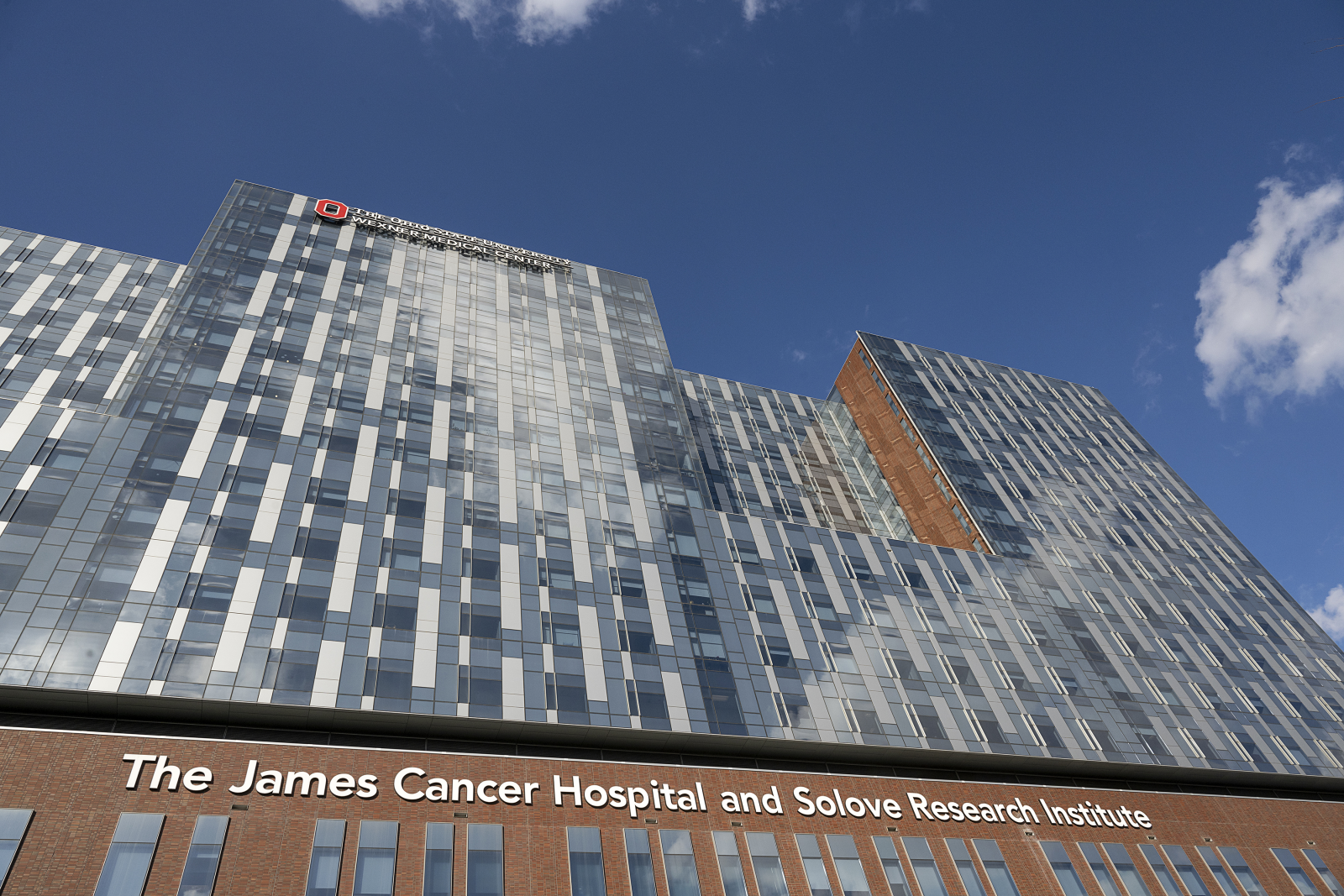
On October 25, the Palliative Care Pharmacy Team at The Ohio State University Comprehensive Cancer Center – Arthur G. James Cancer Hospital and Richard J. Solove Research Institute received the Ohio Society of Health-System Pharmacy (OSHP) Best Practice Advancement Success Award at the OSHP Annual Meeting and Residency Showcase in Newark, Ohio.
This award recognizes innovative Ohio health-systems that have demonstrated pharmacy practice advancements in accordance with the American Society of Health-System Pharmacists (ASHP) Practice Advancement Initiative (PAI). The palliative care team was selected for their advancement of pharmacist prescribing privileges.
In 2021, Ohio enacted legislation allowing pharmacists to register with the Drug Enforcement Administration (DEA) as a certified prescriber of controlled substances. The members of the OSUCCC – James Palliative Care Pharmacy Team viewed this change in legislation as an important opportunity to expand their capabilities and fill gaps of care with their patient population.
Palliative care pharmacists have historically functioned as agents of their team physicians, adjusting patients’ non-controlled prescriptions between appointments.
“Primarily, we practice with patients seen at OSUCCC – James for oncology care, and we will see them for any symptoms related to their cancer diagnosis,” said Tristan Tyger, PharmD, ambulatory palliative care pharmacy specialist. “Timely responses to changes in patients’ pain and symptom management are so important to maintain their comfort and quality of life, so expanding pharmacists’ ability to manage all medications would make a major difference in patient care.”
Over the last four years, palliative care pharmacists have advanced their practice by securing DEA certification and expanding clinical responsibilities to pharmacist management of controlled medications. This increase of clinical capabilities has blazed a new trail for pharmacy teams at The Ohio State University Wexner Medical Center (OSUWMC).

Before achieving DEA licensure, the team had to secure internal approval from OSUWMC leadership and their medical colleagues in palliative care to incorporate their new prescribing privileges into their consult agreement. This agreement is what allows pharmacists to manage patients’ prescriptions as agents of their physician.
Gary Houchard, PharmD, palliative medicine clinical pharmacy specialist; Justin Kullgren, PharmD ’05, FAAHPM, FPPCP, palliative medicine clinical pharmacist; and Dr. Tyger supported early discussions between palliative care pharmacists, OSUWMC leadership and their patient care teams.
“One of the most notable highlights throughout this process was the overwhelming support we received,” Dr. Houchard said. “Despite the fact that significant practice changes can be met with some hesitation, we received such strong encouragement from our providers as well as medical and pharmacy leadership at OSUWMC. This support was instrumental in allowing the initiative to progress smoothly and effectively.”
OSUWMC leadership and the palliative care medical team championed the innovative effort of the pharmacists, a demonstration of OSUWMC’s culture of practice transformation and support for pharmacist-led care.
"Pharmacists are highly trained to assess, manage and adjust complex medication regimens,” said Trisha Jordan, PharmD, MS ’01, assistant dean for medical center affairs at the college and chief pharmacy officer at OSUWMC. “Granting them DEA prescribing authority empowers them to function as true physician extenders, ensuring faster access to essential medications and more seamless transitions of care. This autonomy enhances patient safety, optimizes therapeutic outcomes and allows the team to deliver more comprehensive and compassionate care.”
Once the team had secured OSWUMC backing, they still needed to secure endorsement from the Ohio Board of Pharmacy to apply for controlled-substance prescriber licenses with the DEA. The license filing process required extensive applications, document filing and an eight-hour course on substance use disorder treatment and management for all participating pharmacists.
"Pharmacists are highly trained to assess, manage and adjust complex medication regimens. Granting them DEA prescribing authority empowers them to function as true physician extenders, ensuring faster access to essential medications and more seamless transitions of care."
As the palliative care team rounded the final corner of the process, it was clear that they were at the start of something new. As they finalized their licensure in 2024, fewer than 50 pharmacists in the state of Ohio had achieved the certification.
“Our team started discussing DEA registration about four years ago, after carefully creating the privileges and collaborative practice agreement to allow our pharmacists prescribing abilities,” said Stephen Polley, PharmD, MPA, MS, BCPS, director for cancer pharmacy services at OSUCCC – James. “It certainly wasn’t a quick process to achieve licensure, but that’s the beauty of this. We now have a roadmap that other groups at OSUWMC can adopt.”
The advancement of pharmacists’ capabilities in palliative care allows for a more effective triage system, where pharmacists can make quick, appropriate changes to give patients relief from their symptoms. This allows other members of the care team to focus on the needs of other patients.
Since implementing this change in pharmacist privileges, team members report that their patients spend less time on the phone with providers trying to address symptoms and have higher satisfaction with palliative care at OSUCCC – James.
Ultimately, it’s shaping up to be a change that results in a higher quality of care for patients.
“The palliative care pharmacists were ideally positioned to be the first group to obtain DEA licensure given their strong clinical expertise in this space and established collaborative relationships with their physicians,” Dr. Jordan said. “Their successful implementation serves as a proof of concept and framework for other pharmacy teams across OSUWMC.”
And the demand is there. Currently, palliative pharmacists are supporting their colleagues in the substance use disorder specialization as they explore this avenue of controlled substance prescribing licensure.
Plenty of teams across OSUWMC include pharmacists with the expertise to provide this advanced prescribing service and offer more responsive care.
“It is vital to allow the pharmacist to practice at the top of their license,” Dr. Polley explained. “Having this prescribing ability allows the pharmacist to provide the same level of care to all patients regardless of their need for a controlled substance.”