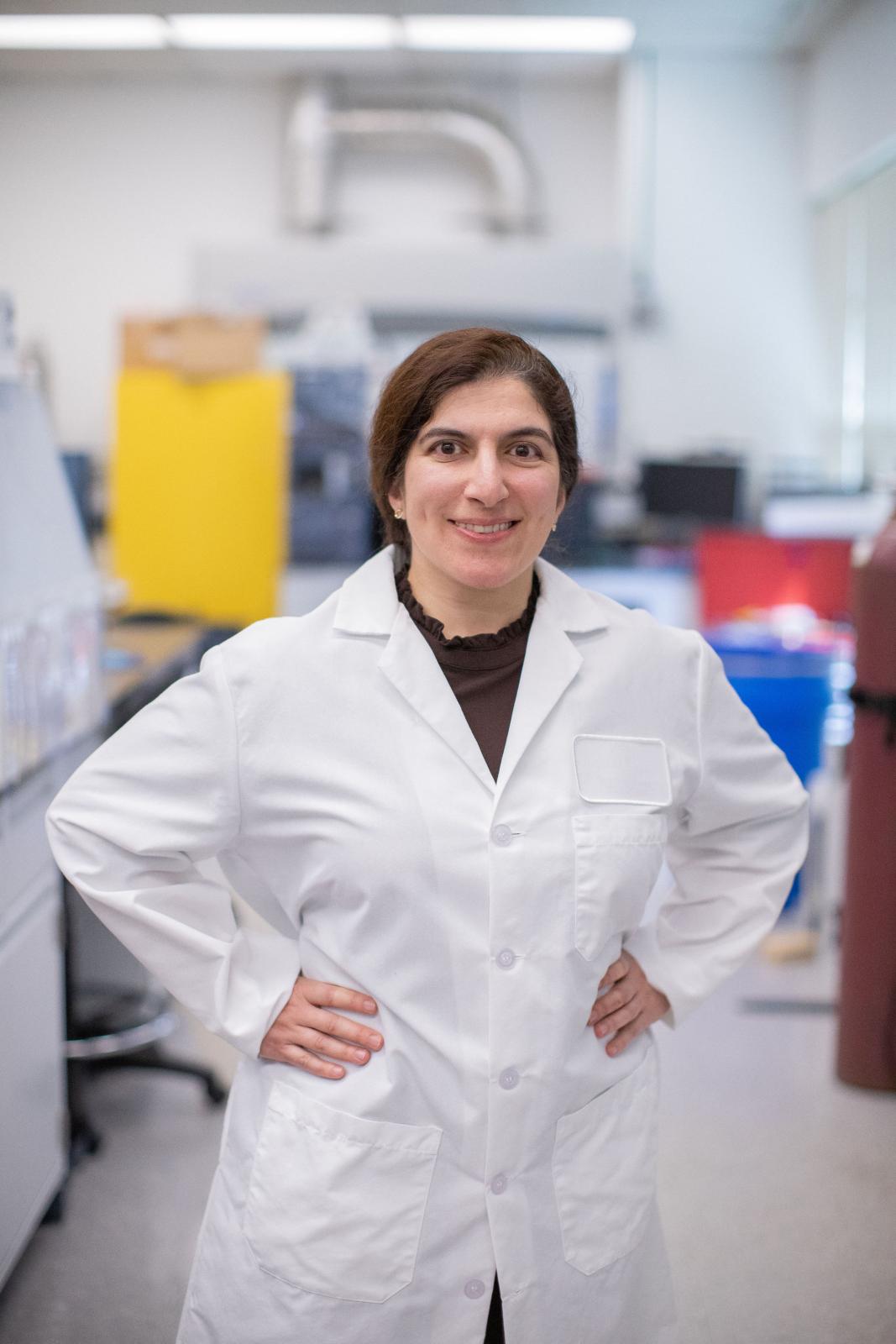
Dr. Razi Kebriaei receives a $3.7 million research award from the National Institutes of Health
Razi Kebriaei, PhD, assistant professor in the Division of Pharmaceutics and Pharmacology, has secured a $3.7 million NIH award to uncover the mechanisms behind the cefazolin inoculum effect (CzIE) and improve treatment strategies for difficult-to-treat infections.
CzIE is a phenomenon that can potentially reduce the effectiveness of cefazolin, a commonly used antibiotic for treating serious methicillin-susceptible Staphylococcus aureus (MSSA) infections. MSSA remains a leading cause of bloodstream infections, endocarditis, osteomyelitis and other severe infections, contributing substantially to patient morbidity and mortality.
By investigating CzIE from a translational perspective and evaluating its impact on clinical outcomes, clinicians will gain deeper insights into the molecular mechanisms and real-world factors that influence cefazolin effectiveness.
Through a multicenter study involving 10 medical centers across the United States, encompassing approximately 1,000 patients, Dr. Kebriaei and collaborators Drs. Taylor Morrisette (MUSC), Andrew Berti (WSU), Junan Li (OSU) and Dan Wozniak (OSU) will investigate the prevalence, underlying mechanisms, and clinical consequences of the CzIE. By leveraging the geographic and patient diversity represented across various states, the study will provide critical insights into how CzIE varies across distinct populations, healthcare systems, and clinical settings throughout the United States.