Dr. Mengying Hu introduces DNA-based therapies through EVs
This article was published in The Script Magazine – Autumn 2026.
Novel.
It’s the word you hear passed around in conversations surrounding DNA-based therapies. It’s also a requirement for any attempt to make DNA therapies feasible.
One of the key advantages of DNA-based gene therapy is its ability to provide cells with long-lasting genetic instructions to produce therapeutic proteins. Because DNA is able to correct genetic defects at the root of the problem, therapies utilizing the material can deliver more substantial assistance to target cells.
But unlike popular mRNA therapies, DNA-based treatment has a higher barrier to entry. While DNA is more stable and less expensive to manufacture than mRNA, it must travel a lot further to have an effect on its subject.
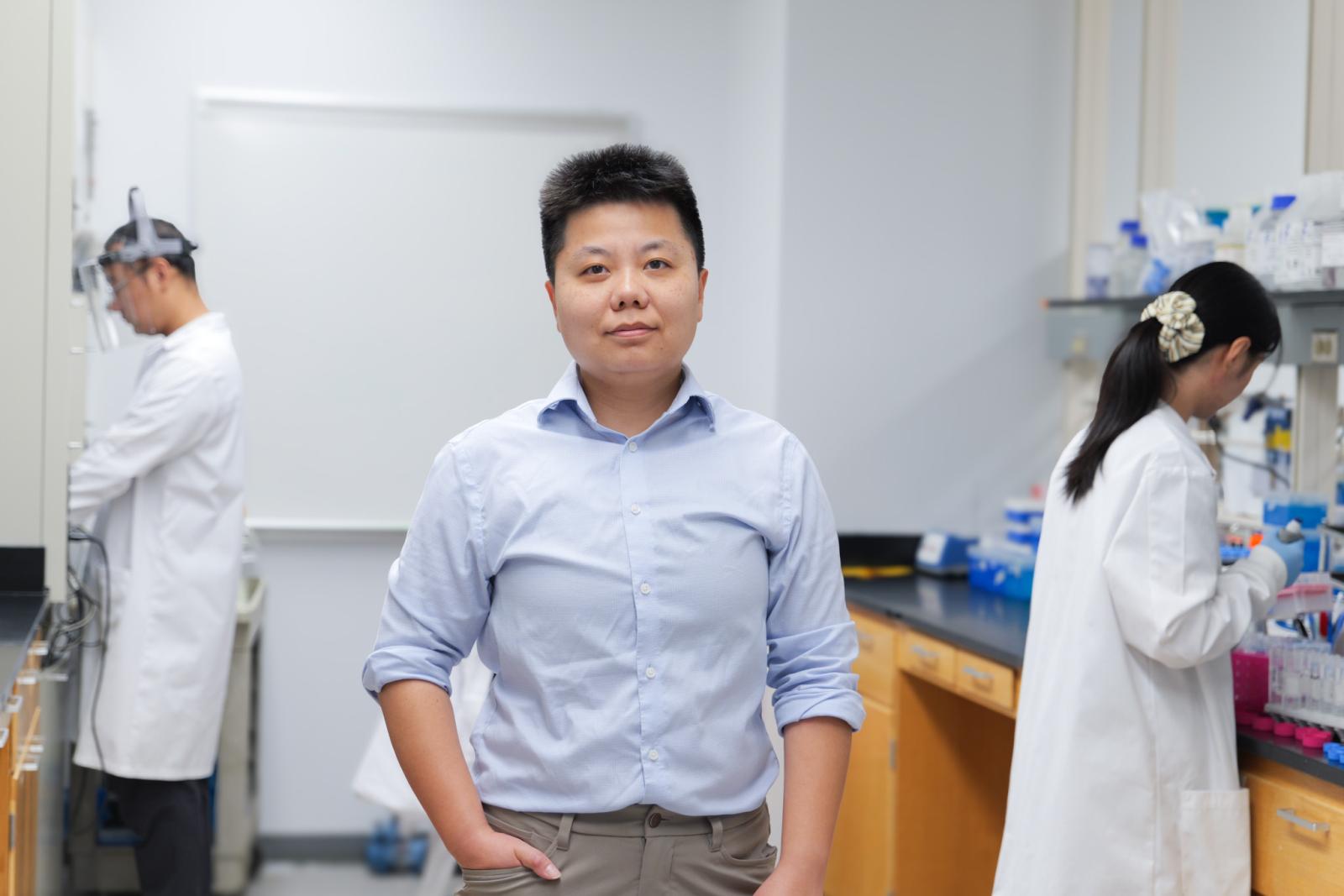
Leading the charge at The Ohio State University College of Pharmacy against this enigmatic and powerful problem of DNA delivery is Mengying Hu, PhD, assistant professor in the Division of Pharmaceutics and Pharmacology.
Since joining the college in autumn 2024, Dr. Hu has made quick work of establishing her first lab as a principal investigator (PI). It’s grown from a small crew of Dr. Hu, postdoctoral scholar Xuehao Zhang, and her two feline lab mascots, Laifu and Dora, to a lab teeming with undergraduate and graduate researchers, visiting scholars and technicians.
"Our lab started out very small, and now we suddenly are so full that there’s no room left,” Dr. Hu said with a laugh. “Recruiting new student researchers and specialized postgraduates has really helped our lab to become self-sufficient.”
The flourishing lab sits at the center of the college’s investigations into the therapeutic potential of T cells, as Dr. Hu zeroes in on extra cellular vesicles’ (EVs) DNA-transporting capabilities.

“For decades, the potential of DNA therapy has been constrained by the challenge of delivering DNA effectively into cells. With this platform, we can now envision a path beyond those long-standing barriers.”
T cells are a type of immune cell that identify and attack threats to the system like infections and malignant disease. EVs are tiny nanoparticles secreted by almost all living cells, including T cells, that transfer proteins, lipids and genetic material between cells.
“For DNA therapies to take effect, they have to successfully get into the nucleus, which is securely enclosed by the double-membrane barrier of nuclear envelope,” Dr. Hu explained. “That’s the biggest limit to adopting these therapies now. But if we solve that problem, we can hypothetically apply DNA therapies for disease treatment that cannot be fulfilled by RNA therapeutics, such as gene replacement for genetic diseases.”
Dr. Hu’s research primarily centers around leveraging the transport abilities of cell-derived vesicles, such as EVs and another new type of naturally occurring vesicles, to deliver genetic materials. It’s their ability to move between cells, crossing nuclear membranes, that makes them an exciting delivery tool for potential DNA therapies.
“The surprising ability of these vesicles to transfer DNA from donor T cells into the nuclei of recipient cells suggests their potential as a natural, non-viral platform for DNA-based gene therapy,” Dr. Hu said. “This non-viral strategy may offer improved safety and efficiency compared with current DNA delivery approaches that use viral vectors.”
To hitch a ride to the nucleus, these cell-derived vesicles are integrated into lipid nanoparticles designed by the Hu Lab. These nanoparticles are created with characteristics that allow them to fuse efficiently, creating a biohybrid platform that can carry the genetic therapy to cell nuclei, where it can get to work.
This design has proved successful, after extensive testing by the Hu Lab.
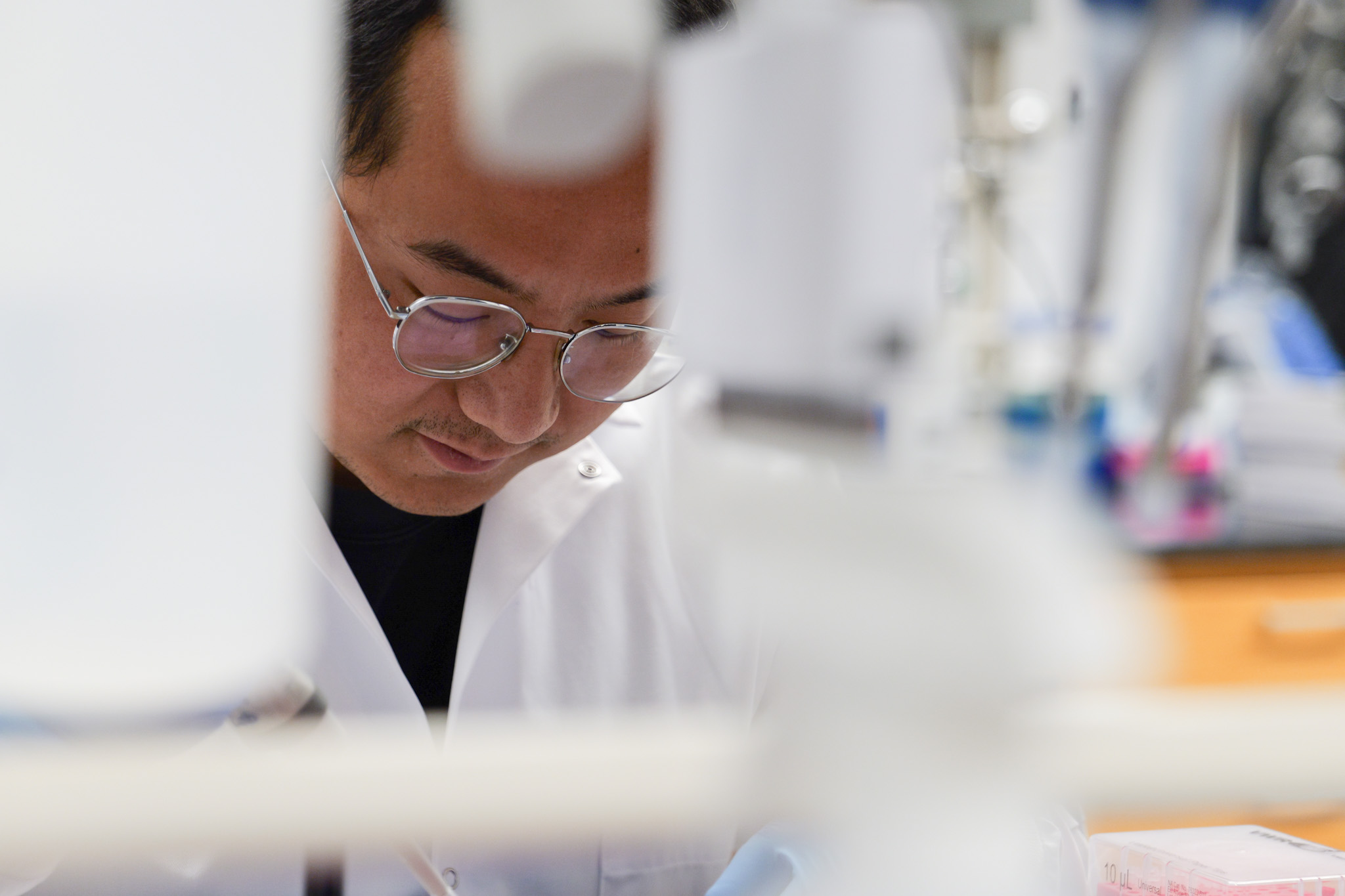
When the researchers infused DNA-carrying vesicles with an anti-cancer immune-boosting gene and introduced them to tumor-bearing subjects, they found that the vesicles were taken up not only by subjects’ immune cells but also by the tumor cells. Tumors treated with these vesicles grew more slowly and showed greater infiltration by T cells and other immune cells, indicating a stronger anti-tumor immune response.
“The successful introduction of the immune-boosting gene dramatically improved subjects’ responses against the cancerous tumor,” Dr. Hu said. “The gene’s long-lasting protection against tumor recurrence in combination with surgery is so impressive that we believe it can bring new hope to cancer patients.”
Building on these discoveries, the Hu Lab and collaborators will continue by engineering different nanoparticles for the treatment that incorporate a variety of gene therapies beyond the tested immune-stimulatory gene.
“Successfully investigating and testing this non-viral DNA delivery platform has fulfilled one of my greatest scientific dreams,” said Dr. Hu. “For decades, the potential of DNA therapy has been constrained by the challenge of delivering DNA effectively into cells. With this platform, we can now envision a path beyond those long-standing barriers.”