Activated T cells release extracellular vesicular DNA – a naturally occurring immunogene therapy
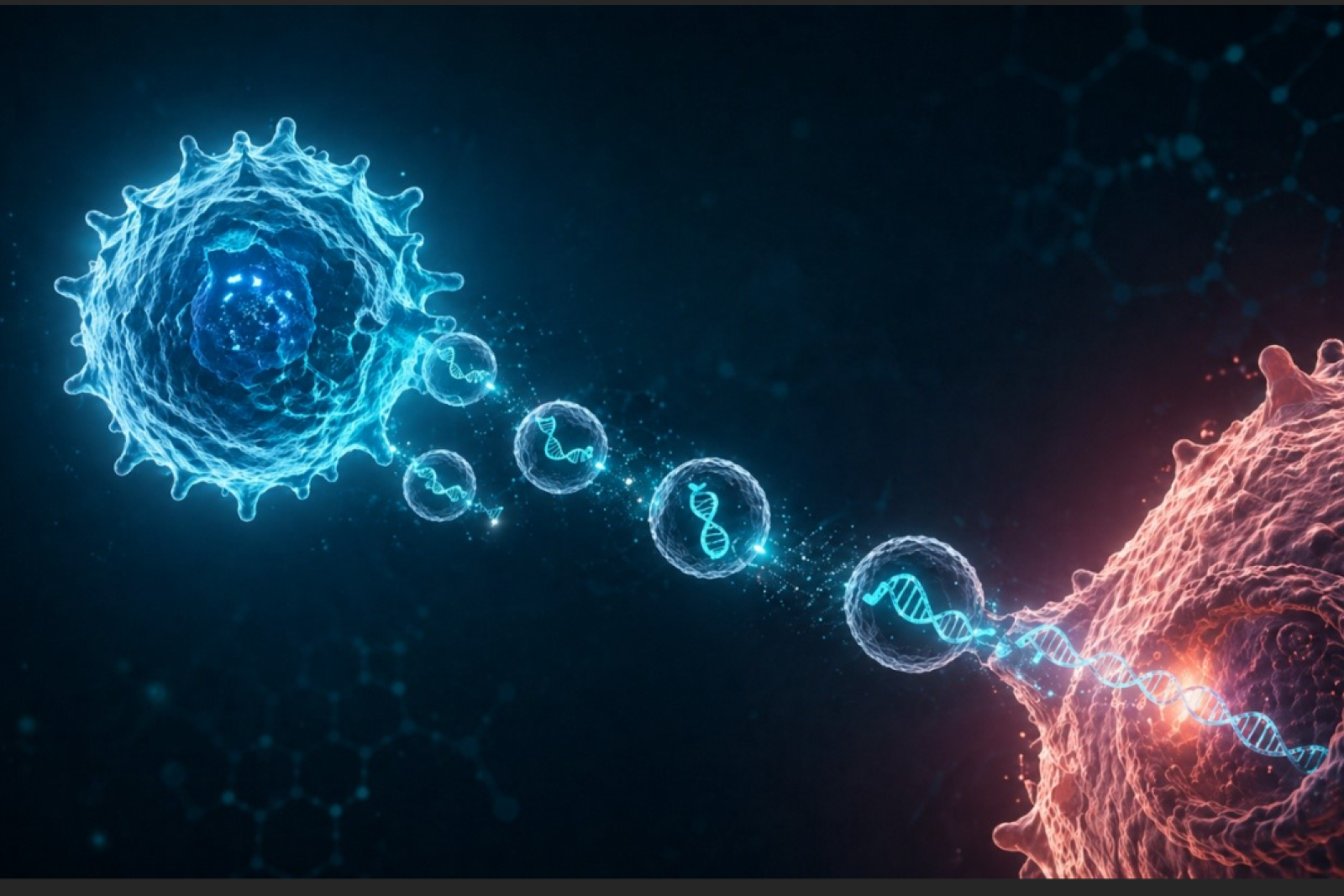
A new study published on April 30 in Cancer Cell by researchers from The Ohio State University and Weill Cornell Medicine reveals a previously unrecognized way that activated T cells can transfer genetic material to other cells—helping the immune system better recognize and fight cancer and potentially inspire a new generation of safer, non-viral tools for delivering genetic therapies.
“Delivering DNA into cells is notoriously difficult because DNA must reach the nucleus to function,” said first author Mengying Hu, PhD, assistant professor in The Ohio State University College of Pharmacy Division of Pharmaceutics and Pharmacology. “Most current DNA delivery strategies rely on viral vectors, which can be highly efficient but may raise safety concerns.”
Dr. Hu began this project while serving as a postdoctoral researcher at Weill Cornell Medicine.
Almost all living cells secrete tiny, membrane-bound particles called extracellular vesicles. These nanoscale vesicles can transfer molecular messages, like proteins and genetic materials, from one cell to another.
In this study, the researchers found that vesicles released by activated lymphoid cells—key players in the immune system—carry unusually high levels of DNA. Understanding what this vesicle-associated DNA does, and how it works, became a central focus for Dr. Hu and the team led by Dr. David Lyden at Weill Cornell Medicine, including co-first author Dr. Di’ao Liu and co-senior authors Dr. Haiying Zhang and Dr. Irina Matei.

“The surprising ability of these vesicles to transfer DNA from donor T cells into the nuclei of recipient cells suggests their potential as a natural, non-viral platform for DNA-based gene therapy.”
The team first discovered that, under normal physiological conditions, vesicles secreted by activated T cells naturally travel to immune hubs such as lymph nodes and the spleen. There, they are taken up by antigen-presenting cells, including dendritic cells, which play a critical role in activating T cells and launching immune responses. Once delivered, these vesicles enhance the antigen-presentation process, creating a positive feedback loop that strengthens T cell priming and broader immune activation.
The researchers then identified DNA as a key immune-boosting cargo within these vesicles. Much of this DNA was found on the vesicle surface, mainly sourced from parental T cell nucleus and enriched for immune-related genes, including genes involved in helping cells display antigens to the immune system.
“The surprising ability of these vesicles to transfer DNA from donor T cells into the nuclei of recipient cells suggests their potential as a natural, non-viral platform for DNA-based gene therapy,” Dr. Hu said. “This points to a broadly applicable gene-transfer strategy that may offer improved safety and efficiency compared with current DNA delivery approaches.”
The team also uncovered a mechanism that helps explain how this DNA reaches the nucleus. The vesicles carry a specialized enzyme on their surface that acts like a molecular drill, helping vesicle-associated DNA enter the nuclei of recipient cells.
When the researchers infused DNA-carrying vesicles from activated T cells into tumor-bearing mice, they found that the vesicles were taken up not only by immune cells but also by tumor cells themselves. Tumors treated with these vesicles grew more slowly and showed greater infiltration by T cells and other immune cells, indicating a stronger anti-tumor immune response. Because cancers—and many viruses—often evade immunity by suppressing antigen presentation and becoming “invisible” to immune attack, these vesicles appear to help reverse that process by restoring tumor visibility.
The researchers demonstrated the therapeutic potential of this approach, both alone and in combination with existing immunotherapy, in preclinical models of three difficult-to-treat, immunologically “cold” cancers: glioblastoma, pancreatic cancer, and triple-negative breast cancer.
Together, the findings reveal a new form of immunotherapy: acellular immunogene therapy. In this approach, DNA-carrying vesicles from activated T cells amplify anti-tumor immunity by acting on both sides of the immune response—enhancing antigen-processing machinery in antigen-presenting cells and making tumor cells more recognizable to the immune system.
Building on this discovery, the Hu lab is now working to develop next-generation non-viral gene delivery platforms inspired by T cell-derived vesicles. These efforts include engineering T cells to produce more powerful vesicles and integrating naturally occurring vesicle components into synthetic lipid nanoparticle systems to improve DNA cargo delivery.