Resident and preceptor pair receive APhA funds for AI patient education research

Sydney Robbins, PharmD ’24, is giving patient education a 21st century boost.
The PGY2 resident of the The Ohio State University College of Pharmacy and General Internal Medicine (GIM) program is a recent recipient of an American Pharmacists Association (APhA) Foundation Incentive Grant for Practitioner Innovation in Pharmaceutical Care.
Dr. Robbins and her preceptor, Suzanne Higginbotham, BCACP, CTTS, CDCES, ambulatory clinical pharmacist of Ohio State’s GIM division, are using this grant to advance their current research project, “Utilizing Generative Artificial Intelligence to Develop Patient Education Materials in the Primary Care Setting.”
“Making patient education materials (PEMs) is time-consuming and labor-intensive for clinicians,” Dr. Robbins said. “There’s a lot of complex information to put in patient-friendly terms. If we can utilize AI to make accurate PEMs for the primary care setting, we can not only save the time of clinicians but also offer patients information for more aspects of their wellness and treatment.”

“Being really involved in my own research projects has been so important as I prepare to work with a residency program in the future.”
Incentive grants from APhA have historically provided key support to pharmacy professionals looking to make a mark on the field, whether through practice model changes or innovative research.
With the funding provided by the incentive grant, Drs. Robbins and Higginbotham are able to provide payment incentives to research participants.
“The project idea was crafted because we identified a need in our clinics,” Dr. Higginbotham said. “We wanted to explore the accuracy of AI-generated materials and how they can be used more efficiently for patient education while ensuring they are both readable and clinically valid.”
Drs. Robbins and Higginbotham utilized Microsoft 365 Copilot to design 10 PEMs. These materials have been shared with five pharmacists and five physicians at The Ohio State University General Internal Medicine (GIM) clinics for review. Each of the reviewers will complete a survey on the PEMs’ accuracy and usability and the likelihood that they would share them with patients.
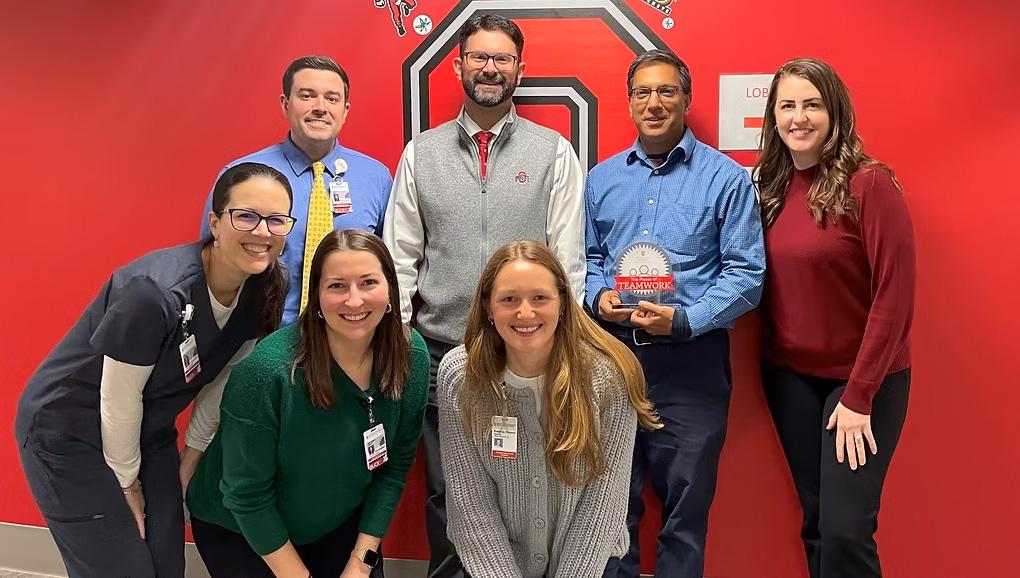
The study survey can take up to one hour to complete, so the grant-supported payment incentives were a game-changer, garnering higher participation from GIM clinicians.
“Our clinicians are extremely busy, so asking them to participate in a time-intensive project is no small thing,” Dr. Robbins said. “Luckily, with the combination of securing this incentive funding and working in a program that really prioritizes supporting team members, we’ve been able to gather the necessary participants among our physicians and pharmacists.”
As Drs. Higginbotham and Robbins wait for surveys to be completed so that they can move forward with data analysis, they’re excited for what their results could mean for clinical use of AI.
“Seeing a resident like Dr. Robbins take ownership of this research question and rigorously assess AI tool accuracy, readability and clinical usefulness is rewarding,” said Cory Coffey, PharmD, MS ’24, BCACP, BCPP, manager of pharmacy services at OSU Physicians and residency program director for the Ambulatory Care Pharmacy Residencies at COP/GIM. “It’s innovative, it’s practical and it has the potential to scale well beyond just our GIM clinics.”
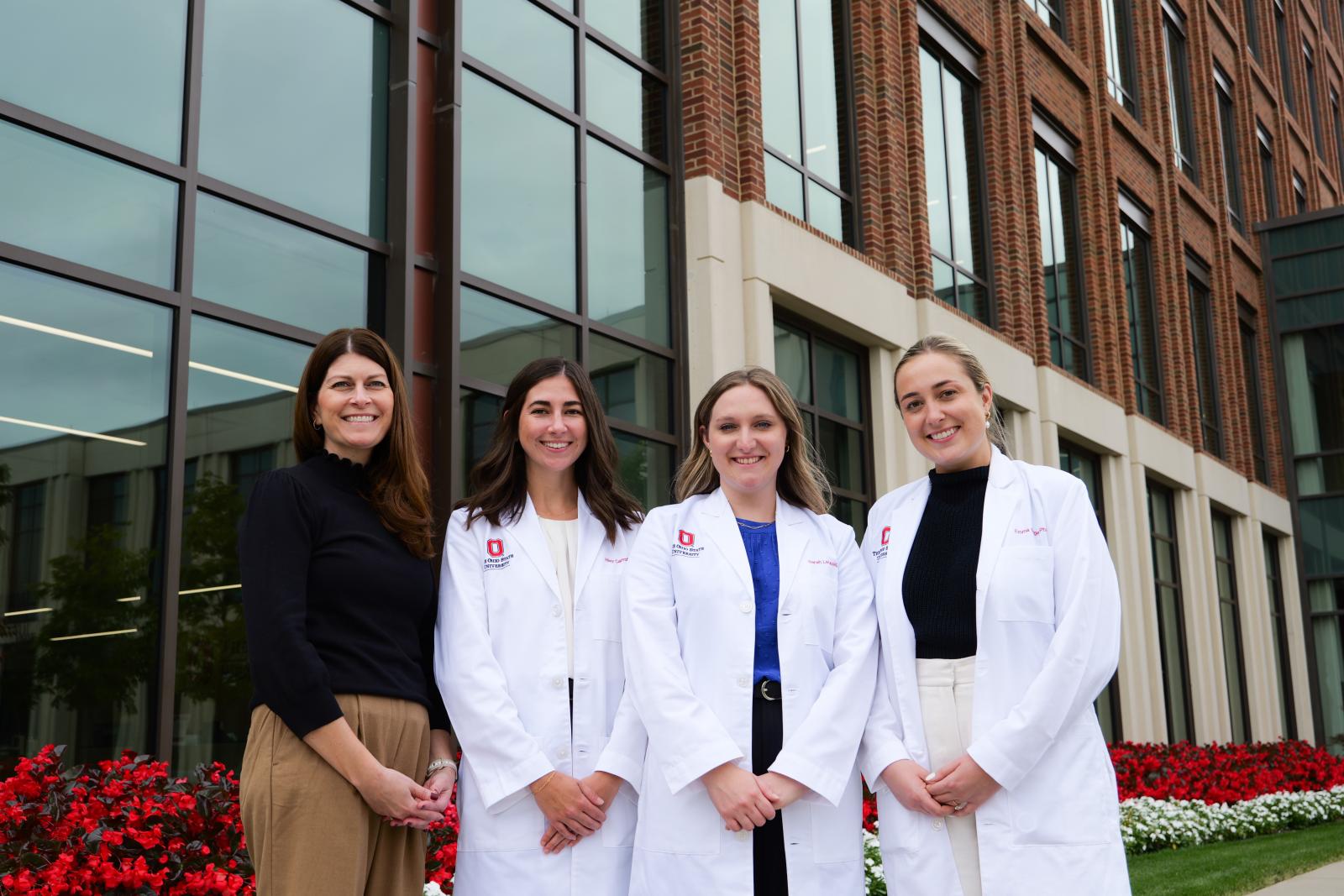
The research project not only investigates an opportunity for innovative care, but it also serves as Dr. Robbins’ PGY2 research project. Members of the college residency program are expected to complete a research project each year, taking advantage of the mentorship offered at their practice sites and the college.
In her two years as a GIM resident, research has been a defining experience for Dr. Robbins’ career.
“Finding a residency program that emphasized research was a major factor when I was applying,” Dr. Robbins recalled. “Something that drove me to the Ohio State College of Pharmacy GIM program was the flipped research model, which allows residents to hit the ground running as soon as they begin their program. In this model, residents are immediately connected with a project that’s already IRB-approved.”
Dr. Robbins has initiated and executed several research projects that address topics that she’s actively encountered as a returning resident of GIM.

"Residents are not doing theoretical research but directly tying projects to improving real-world practice and patient outcomes.”
“What’s unique about our programs is that residents are embedded in real clinical environments where meaningful research questions naturally come up,” Dr. Coffey said. “Residents are supported by a strong academic infrastructure through Ohio State and the GIM practice sites. That combination allows residents to work on projects that are both rigorous from a research standpoint and very relevant to outpatient care.”
Dr. Robbins' role in this transformative study highlights the importance of residents and clinicians in the world of research—offering invaluable insight on how to innovate and improve patient care.
“In practice, we’re constantly making decisions, and research teaches you how to evaluate evidence, identify gaps and think critically about whether what we’re doing is actually working,” Dr. Coffey emphasized. “Residents are not doing theoretical research but directly tying projects to improving real-world practice and patient outcomes.”
As she wraps up her time as a pharmacy resident, Dr. Robbins is hopeful that her diverse research and care experiences will prepare her for a precepting career herself.
“Being really involved in my own research projects has been so important as I prepare to work with a residency program in the future,” Dr. Robbins emphasized. “Dr. Higginbotham is doing work that I want to be doing someday, so it’s really valuable to have this program to engage with preceptors like her and be a leader for research experiences.”