MS HSPAL student-residents get once-in-a-career opportunity opening new University Hospital
This article was published in The Script Magazine – Spring 2026.
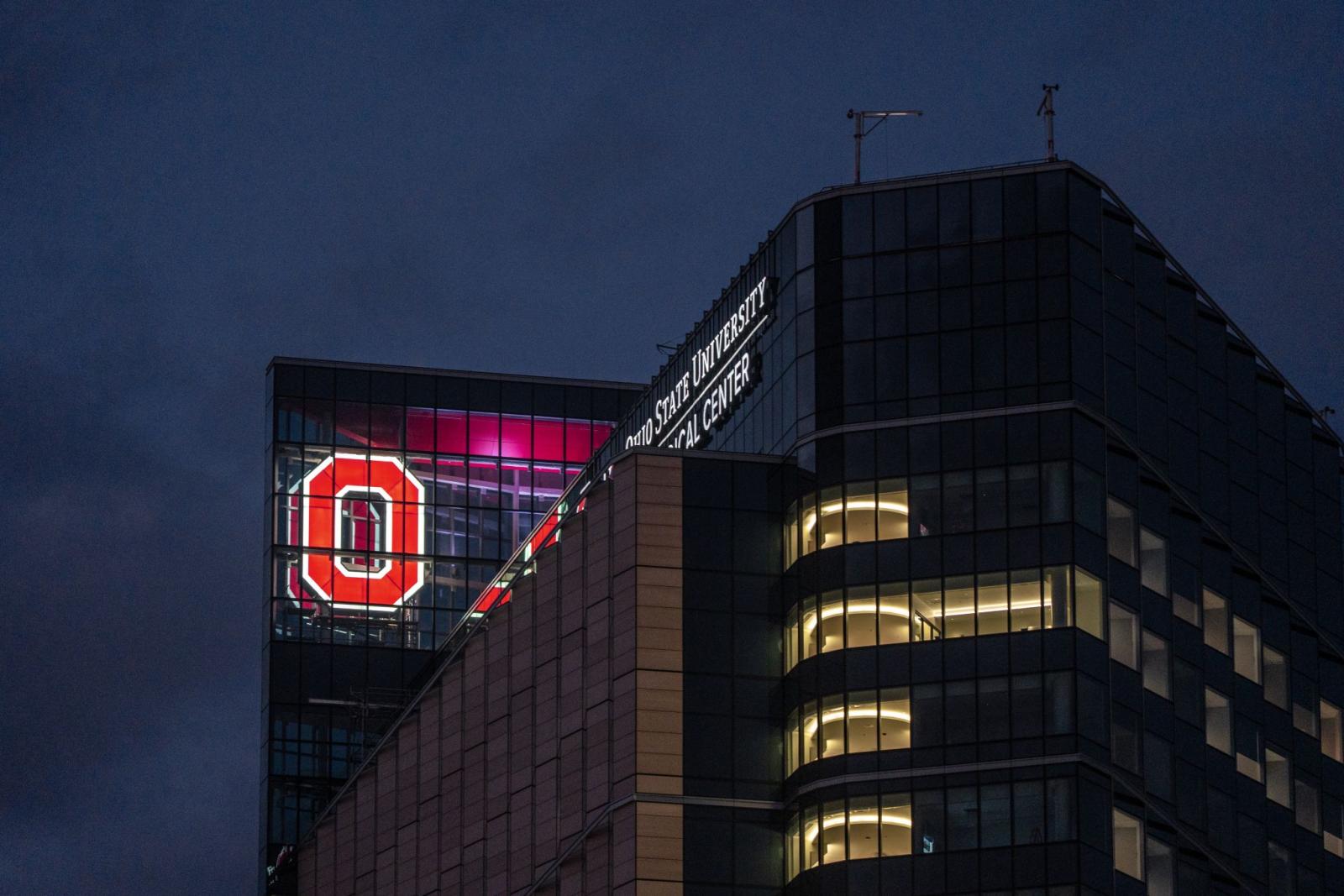
The new Ohio State University Wexner Medical Center (OSUWMC) University Hospital tower rises above its neighbors at the intersection of Ohio State’s academic and medical campuses. For five years, it has been a looming presence behind the College of Pharmacy, and in February 2026, it welcomed its very first patients.
The 1.9-million-square-foot building is the largest single-facility construction project ever undertaken at Ohio State, and it is humming along thanks to the help of three student-residents in the College of Pharmacy's Master of Science in Health-System Pharmacy Administration and Leadership (MS HSPAL) program.
PGY2 pharmacy residents and MS HSPAL students Hanna Iarussi, PharmD; Dylan McWilliams, PharmD; and Isaac Schmiesing, PharmD, became part of an interdisciplinary cohort that gained hands-on, real-time experience operationalizing the new 26-story, 820-room University Hospital tower.
“Participation in a project of this magnitude provided an unparalleled opportunity for growth and leadership development,” said Lisa Mostafavifar, PharmD, MS ’22, BCPS, BCNSP, clinical associate professor and director of the MS HSPAL program at the College of Pharmacy. “It positioned students to help shape pharmacy systems and services in ways that most professionals in health-system administration may encounter only rarely in their careers.”
The groundbreaking experience was offered through a unique, one-time elective developed by Kelly Scheiderer, RHIA, MHA, clinical assistant professor and director of the Ohio State College of Public Health’s Master of Health Administration (MHA) program.
"This elective has been an incredible way to dig into the new facility and see just how complex the insides of a medical center are.”
Scheiderer conceived of the elective when she recognized the once-in-a-career learning opportunity for her MHA students.
“Most of the time, facility projects are renovations and not building a new facility,” she said. “To open a new tower is extremely rare.”
Scheiderer collaborated with Dr. Mostafavifar to involve MS HSPAL students in designing medication distribution models. By spring semester, the three MS HSPAL students joined 39 of their MHA peers, growing as leaders and learning to embrace extreme change.
“I’m someone who can be really averse to change at times, but adopting an open mindset was key to our work here,” Dr. Iarussi said. “When you’re opening a facility of a size that hasn’t been seen by our medical center, you need to shift your approach to patient care and leadership.”
A classroom like no other
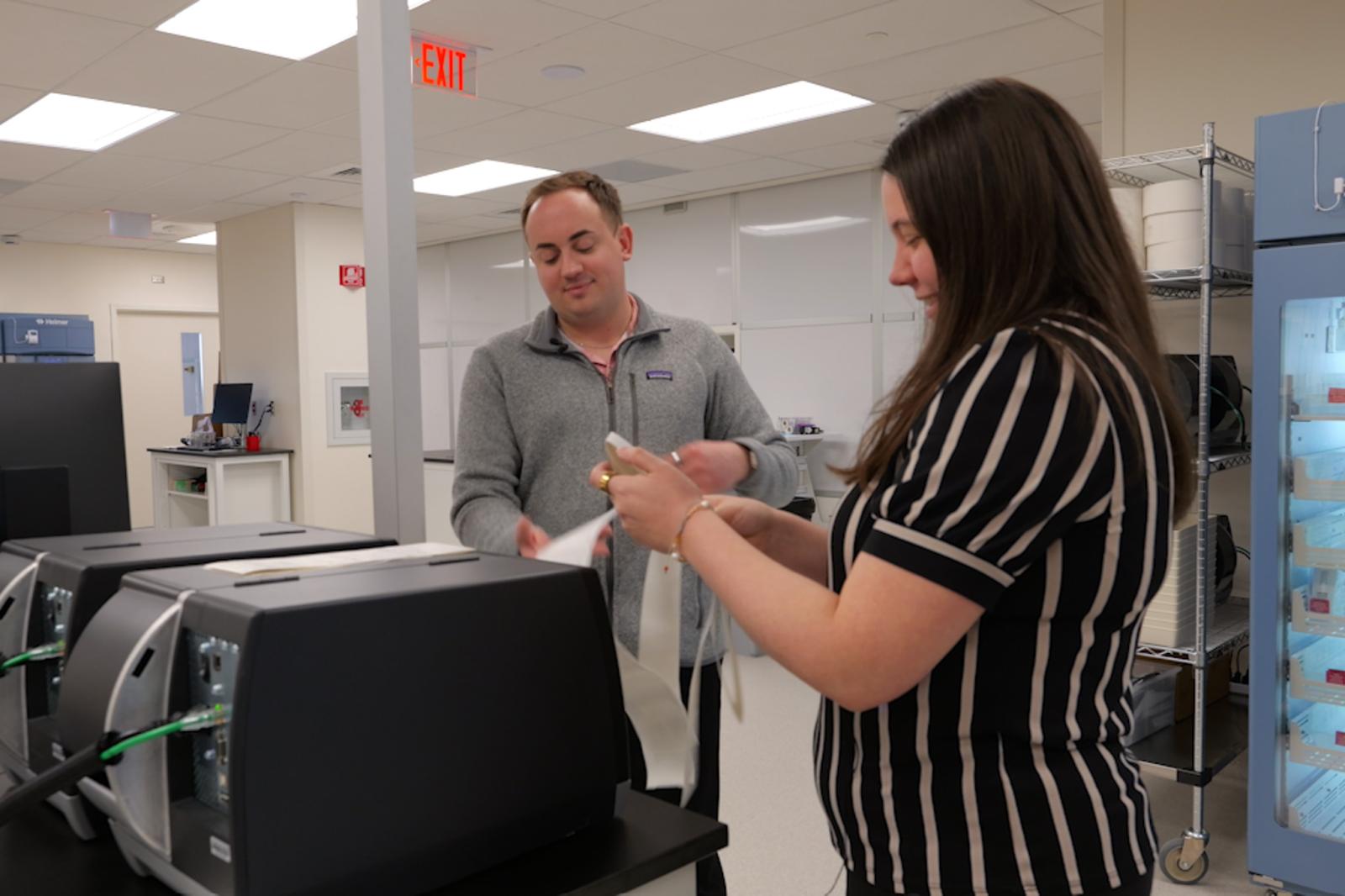
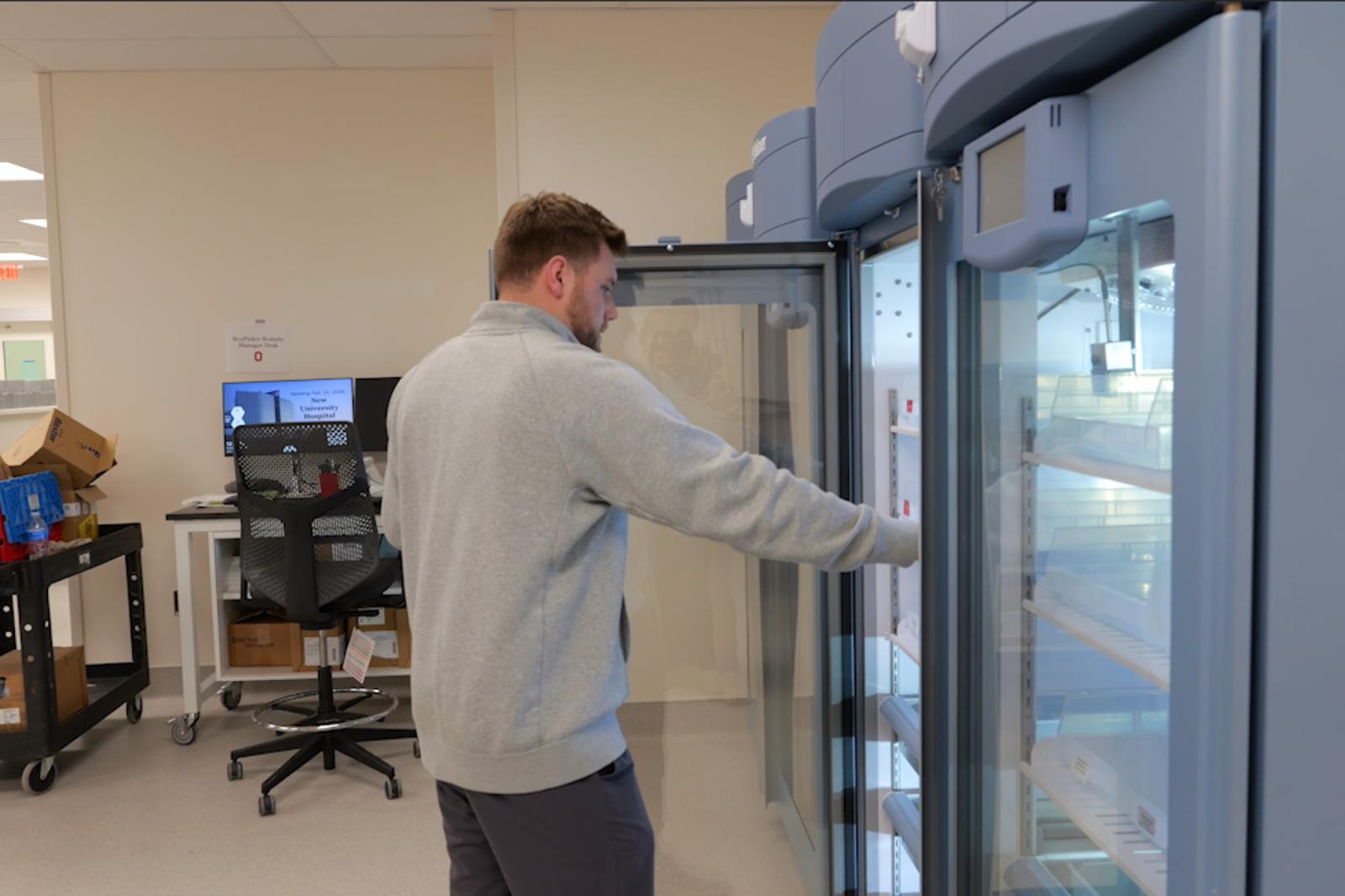
While their MHA peers worked one-on-one with clinical staff at the new hospital to assist with training, Drs. Iarussi, McWilliams and Schmiesing set up inpatient and outpatient pharmacies and designed drug delivery models – thinking critically about what new demands the tower will have for the pharmacy care teams.
“As we stepped into these responsibilities, it felt like a very tangible payoff of our training in the MS HSPAL program,” Dr. McWilliams said. “Everything that we learned in our first year regarding operations, staff management and directing facility changes was applied directly to this experience. We expanded upon those skills by stepping up as pharmacy leaders and learning from the experienced staff overseeing other aspects of the project.”
One of the major services that transitioned to University Hospital is the Meds-to-Beds program. This service delivers prescriptions to patients preparing for discharge.
“There are so many aspects of our team’s work that I’m proud of,” Dr. McWilliams said. “Not only have we adjusted services like Meds-to-Beds out of necessity, but we’ve turned this into an opportunity to optimize existing processes throughout OSUWMC. It’ll make patient and pharmacist experiences better.”
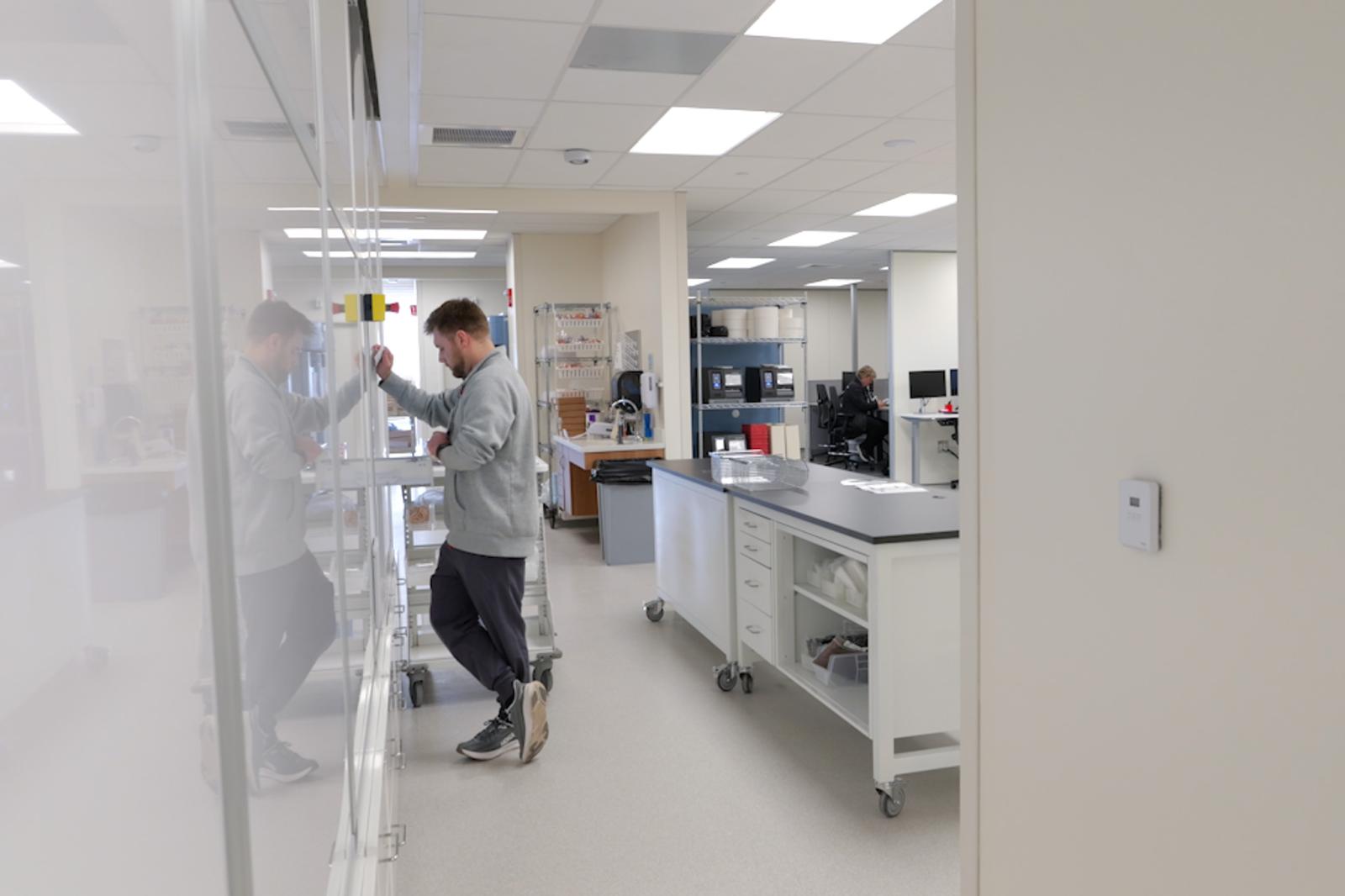
Drs. Iarussi and Schmiesing served as contacts for University Hospital’s inpatient pharmacy and oversaw pharmacy automation and crash cart preparation, while Dr. McWilliams led OSUWMC’s patient‑facing outpatient pharmacy.
“Transitioning the outpatient pharmacy services has meant working with a huge team of retail managers and the lead outpatient pharmacists at The James,” he said. “Since I’ve staffed in both inpatient and outpatient pharmacies here at OSUWMC for close to two years, it’s great to have a sense of how things work in our system so that I can piece together strategies for the new pharmacy.”
Drs. Iarussi, McWilliams and Schmiesing’s efforts have culminated in operational structures that support patient care as well as the needs of the interprofessional teams.
“One of my biggest takeaways from this experience has been the importance of strong communication,” Dr. Schmiesing noted. “We’ve assisted with projects that we knew would be a part of the hospital setup, but there are always challenges that arise with such a massive undertaking. When a new hurdle appears, we’ve had to connect with other staff to update them on the situation and gather insight on how we can create a solution that works for the whole facility.”
As the day-to-day operations at University Hospital normalize, the impact of this team is apparent. Pharmacy services were shaped by the student-residents' adaptability, leadership and willingness to learn on the go.
“I’m proud of our residents for jumping in wherever they are needed,” said Ben Lopez, PharmD, MS, MHA, BCSP, senior director for acute pharmacy services at OSUWMC and residency co-coordinator of PGY1/PGY2 HSPAL Residency Program. “They consistently go above and beyond and maintain an amazing, positive attitude.”
The elective has served as a strong environment for graduate students’ growth across the health sciences.
“This group of students collaborated with medical center leadership, pharmacy leadership, and other service line leaders and staff to understand their needs as well as ensure patient safety remained front and center at OSUWMC,” Dr. Mostafavifar said. “It’s been a fantastic way to push them beyond their typical pharmacy teams.”
In a historic moment for Ohio State’s medical center, these residents haven’t just learned from this experience, they’ve made it possible.
“The new University Hospital was something that I considered as I was making my decision about where I would complete my residency,” Dr. Iarussi said. “This elective has been an incredible way to dig into the new facility and see just how complex the insides of a medical center are.”