Implications of NIH funding cuts
By Deanna L. Kroetz, PhD, BS Pharm '85, dean and professor at The Ohio State University College of Pharmacy
I have received a lot of questions in recent weeks about the significance of the proposed National Institutes of Health (NIH) funding cuts to the college and how biomedical research is funded in US academic institutions more broadly. I welcome the opportunity to provide an overview of academic research and its critical role in the mission of all research-focused universities and colleges.
At the end of World War II, the United States set out to become a global leader in science and technology and established partnerships with universities and colleges to meet this goal. These partnerships expand the depth and breadth of research that can be undertaken, ensure that the economic benefits of research investments are distributed across the country and provide a fertile training ground for the next generation of scientists.
Government agencies such as the NIH, National Science Foundation (NSF), Agency for Healthcare Research and Quality (AHRQ), Departments of Energy (DOE) and Defense (DOD), and others fund basic, translational and clinical research that expand our understanding of biological and physical processes. In turn, these fundamental discoveries—funded by taxpayers—provide the foundation for private companies to make products that drive economic growth and benefit society. For example, the demonstration that targeting the biological processes disrupted by genetic mutations can disrupt cancer cell growth came out of federally funded academic laboratories. Similarly, our understanding of the mechanisms driving obesity-related diseases such as diabetes, heart disease and fatty liver disease is the result of decades of research by multiple investigators in universities, research institutions and government laboratories.
In setting up this network of university-centered research, the federal government has shared the facilities and administrative (F&A) costs required for large research operations, or what are referred to as “indirect costs.” Earlier this month, NIH announced an across-the-board decrease in funding indirect costs to 15% – from typical rates of 30-70%, depending on the institution.
To understand the impact of this proposed cut in funding (temporarily halted by a court order), let me explain how NIH funding works for our college faculty.
Tenure track faculty generally devote 40-60% of their effort to research and graduate student training. These faculty write multiple NIH grant proposals a year, requesting support for their research. Grant proposals undergo rigorous peer review by panels of experts who judge the merits of the grant based on criteria for significance to the field, impact of the expected findings and the approach proposed. This is a highly competitive process, with funding rates across NIH institutions in the range of 8-25%.
For most of our faculty, the funding success rates mean that they are submitting three to five grant proposals for every funded application. Each grant application also requires a detailed budget that includes justification for the requested “direct costs” of the proposed studies. Typically, these include:
- effort (salary and benefits) for the PI and their research staff (graduate students, postdoctoral fellows and technicians)
- supplies for the experiments
- recharge costs for shared instrumentation and equipment
- graduate student tuition and fees
In addition, F&A—or indirect costs—are added to each budget. These indirect cost rates are negotiated between the university and the federal government every two to four years and represent the shared infrastructure costs of doing research. Examples of research expenses that are covered by indirect costs include:
- utilities for research laboratories
- high-speed data processing and data storage
- staff who support the submission of grant applications and the management of awards
- compliance and training offices that ensure patient safety for clinical studies and compliance with state and federal laws around biological and radiation safety
- hazardous waste disposal
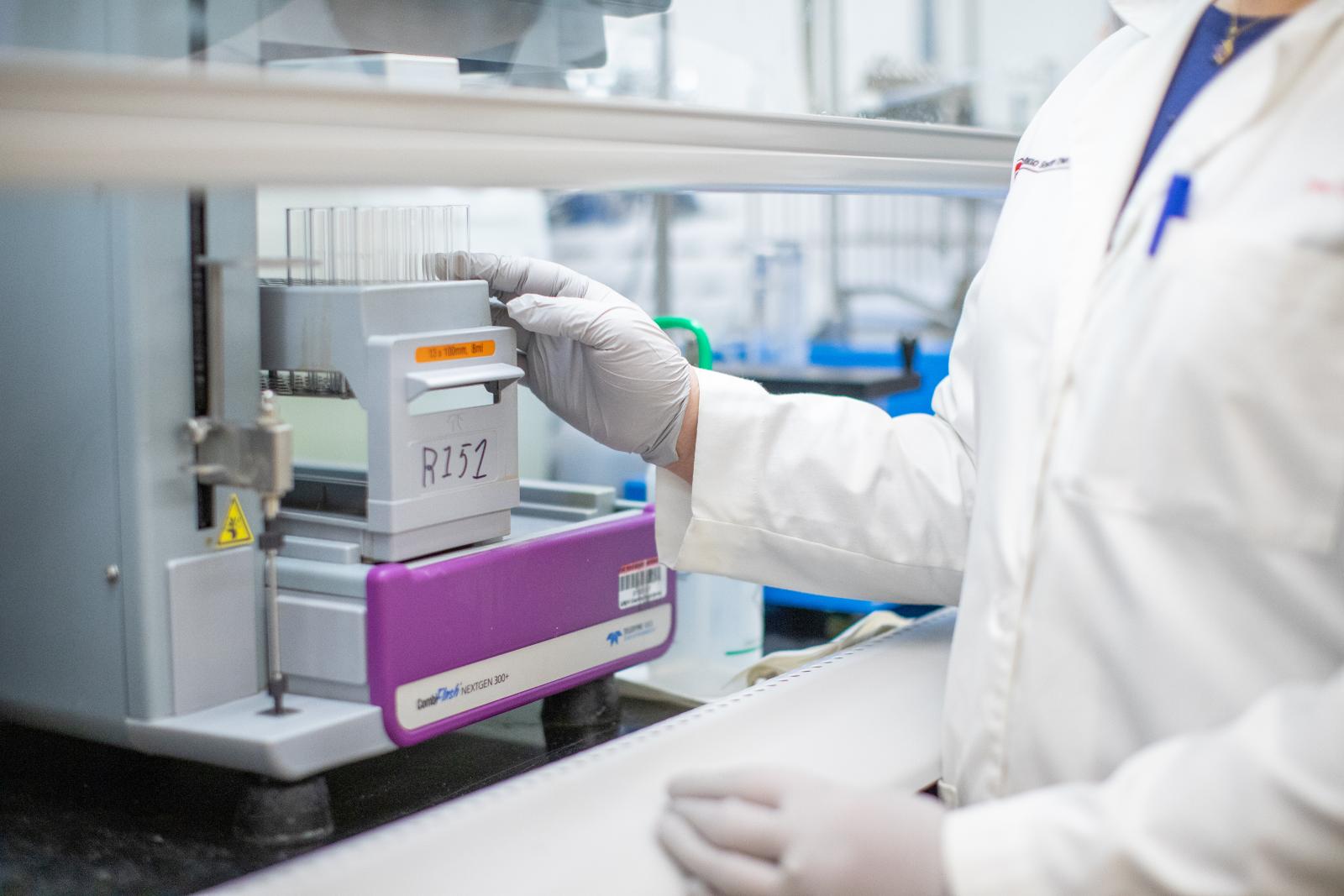
- specialized core facilities and equipment that support the research of multiple laboratories across colleges
These are the real costs of doing research that no single faculty member can take on themselves. The proposed cut in indirect cost rates from the current rate of 57.5% at Ohio State to 15% will significantly impair the ability of our faculty to make discoveries that will benefit human health and well-being.
The Ohio State University College of Pharmacy has a long history of supporting impactful research in medicinal chemistry, pharmacognosy, pharmaceutics, molecular and clinical pharmacology, and outcomes. One of the six priorities of our five-year strategic plan is to "prioritize innovation and knowledge discovery to improve human health." This includes expanding our tenure track faculty to address emerging areas of pharmaceutical sciences and utilizing the latest tools and technologies, such as machine learning/artificial intelligence and multi-omics analyses of human samples.
Modern biomedical science is highly interdisciplinary, requiring collaborations across divisions, colleges and institutions to apply a multi-pronged approach to solving complex problems. This research cannot exist without robust NIH funding of both the direct and indirect costs.